

A detailed guide reveals how the Major and Minor Arcana work together to shape tarot readings, offering insight into life’s big lessons and everyday decisions.
A Tarot deck may hold 78 cards, but they do not all speak at the same volume. According to Tarot.com and other guidebooks, the deck is split into the Major Arcana and the Minor Arcana, and that split is what gives a reading its shape, mood and depth. Think of it a bit like the difference between the big plot of a story and the scenes that show how it unfolds day to day.
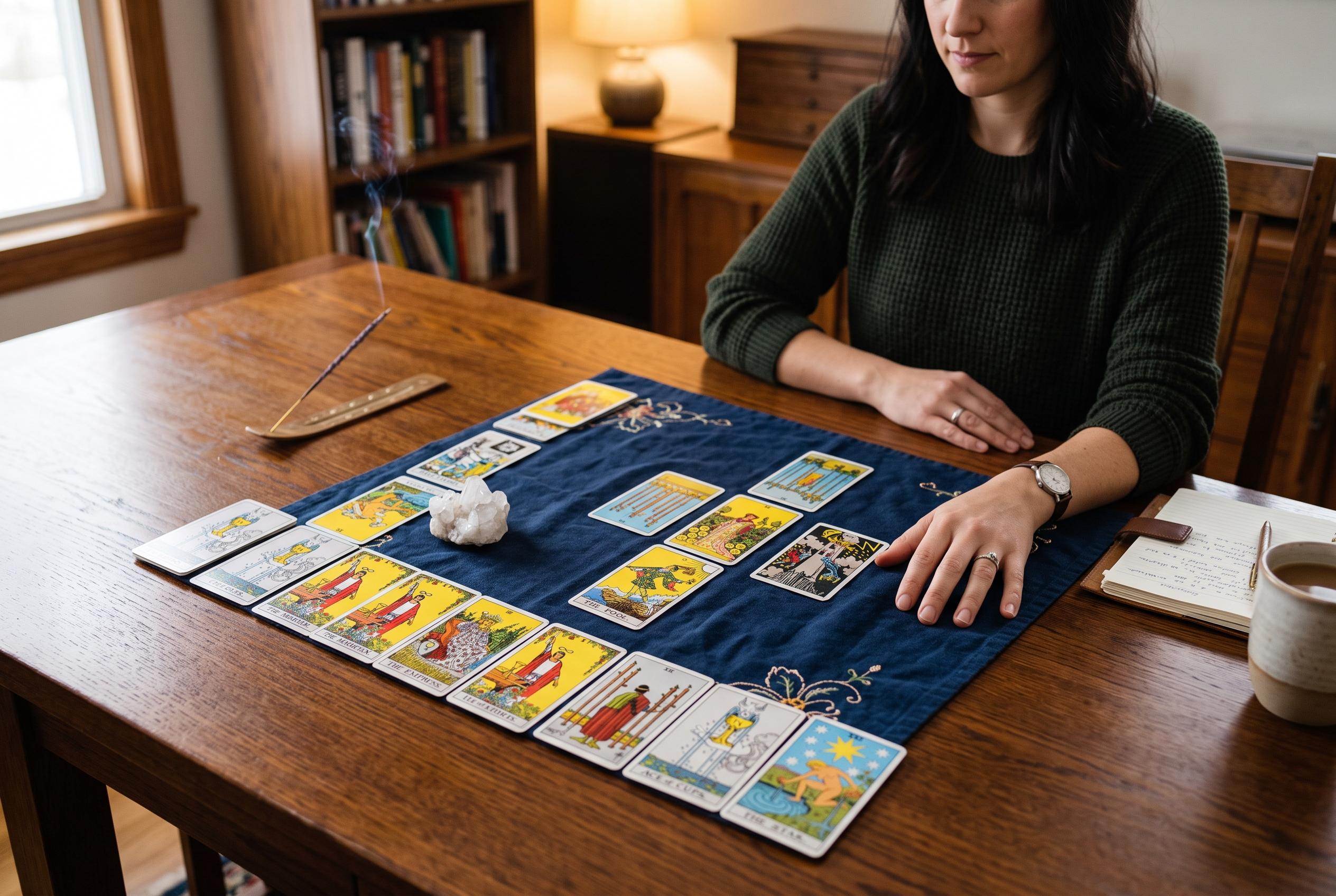
The Major Arcana contains 22 cards and tends to point towards the bigger stuff: turning points, lessons, patterns and moments that feel more significant than routine. The Fool begins the sequence and The World ends it, which is a neat reminder that Tarot often works like a journey. Cards such as The Hermit, Death or The Tower are not just dramatic symbols; they can describe inner change, reorientation or the kind of shift that changes how someone sees things.
The Minor Arcana, by contrast, is the realm of ordinary life. Tarot.com, Gaia and other Tarot explainers describe it as 56 cards split into four suits: Wands, Cups, Swords and Pentacles. Those suits cover action, emotion, thought and material concerns, so they are the cards most likely to speak about work, relationships, money, pressure, communication and the little choices that nudge a situation one way or another.
That is why experienced readers often ask not just what card has appeared, but what layer is talking. A Major Arcana card may describe the deeper theme underneath the situation, while the Minor Arcana often fills in the practical detail. In a career spread, for instance, The Fool might suggest a fresh chapter, while Pentacles cards could show the real-world steps needed to make that leap feel less like a wobble and more like a plan.
The balance between the two also matters. When a spread is packed with Major Arcana cards, the mood usually feels weightier, as though the reading is circling a larger life pattern rather than a short-term problem. When Minor Arcana cards dominate, the message is often more changeable and hands-on. In that case, the cards may be pointing less to fate and more to timing, behaviour, conversation or effort.
Beginners sometimes make the mistake of treating Major Arcana cards as automatically more important and Minor Arcana cards as mere background noise. That is not really how Tarot works. A Major card may show the theme, but a Minor card can reveal the action that changes the outcome. Pairings matter too: Justice with the Ace of Swords feels very different from Justice alone, because the suit card sharpens the practical message.
The simplest way to remember it is this: Major Arcana asks what bigger lesson or turning point is at play, while Minor Arcana asks what is happening in the everyday world around it. Put together, they give Tarot its full range. One offers the story; the other gives the details. And that is usually where the reading starts to feel less like a slogan and more like an actual conversation.
Disclaimer: This content is intended for informational purposes only. Readers are advised to exercise their own judgement, conduct due diligence, or consult a qualified expert before acting on any information provided.