

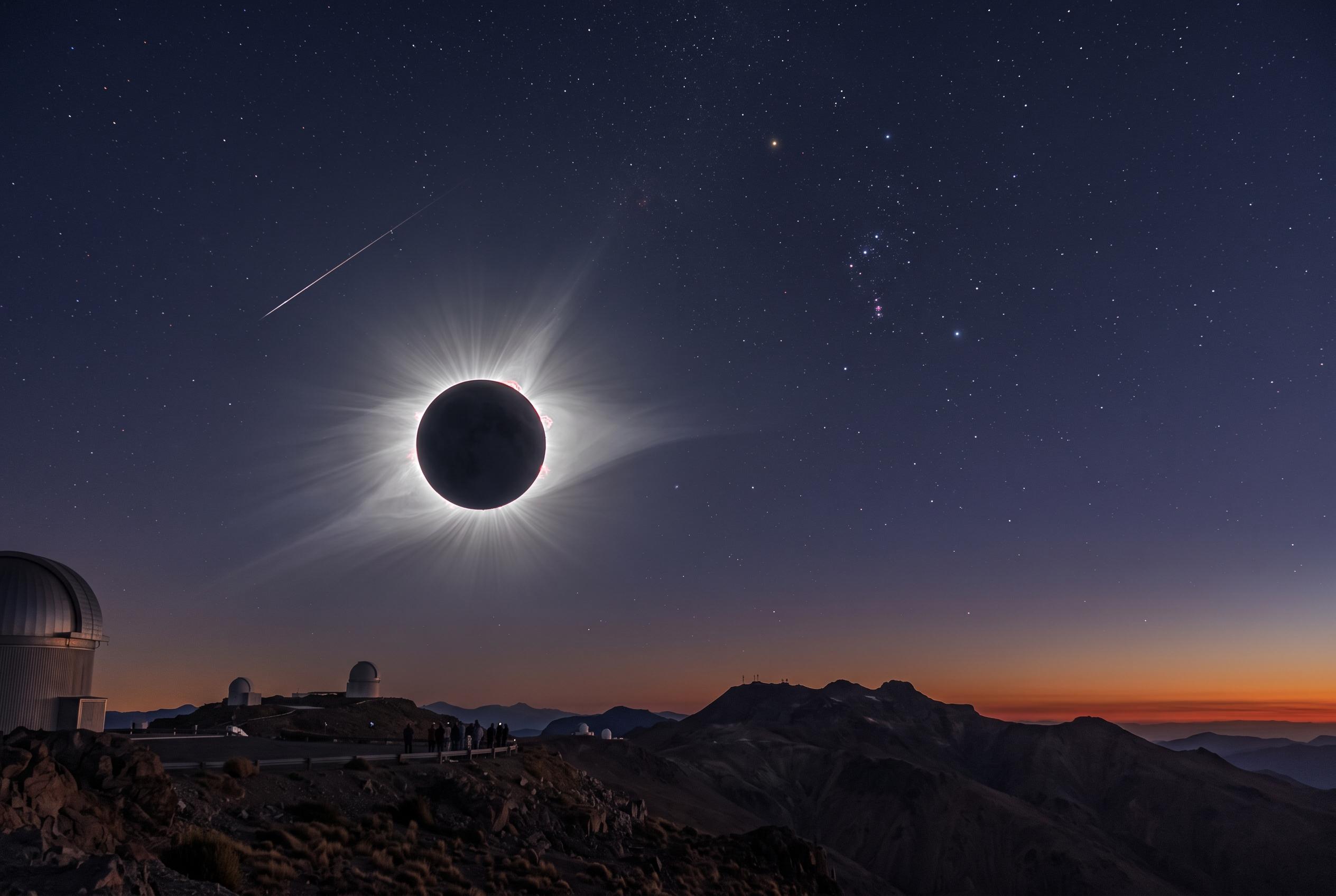

A total solar eclipse on 12 August 2026 coincides with a meteor shower and favourable night-sky conditions, but India will miss the event, highlighting geographical and astronomical distinctions.
August 2026 is shaping up to be a proper skywatching month, and the big date to circle is 12 August. A total solar eclipse is due then, with the Moon briefly covering the Sun and turning daytime into something far more dramatic for people standing in the right place. According to astronomy coverage, the eclipse belongs to a rare run of celestial treats on the same day, including the peak of the Perseid meteor shower and especially strong night-sky viewing conditions.
For readers in India, though, the headline is a simple one: this eclipse will not be visible there. Because it will not be seen from Indian territory, traditional Sutak rules do not apply, and day-to-day religious practice can continue as normal. That means temples should remain open and regular पूजा or rituals are not expected to be interrupted. The total eclipse itself will be confined to a narrow track over parts of the Arctic, Greenland, Iceland and northern Spain, while a partial eclipse will be visible across a much wider swathe of Europe, North Africa and parts of North America.
Astrologically, the eclipse has been linked with Cancer and Ashlesha Nakshatra, which is why some readers may already be treating it as a moment worth watching. The usual advice is not especially dramatic, just sensible: take decisions slowly, keep conversations calm and avoid letting small pressures turn into bigger ones. In the version circulated by the Indian article, five signs are highlighted as needing extra care , Leo, Virgo, Aquarius, Pisces and Taurus , with themes ranging from wavering confidence and higher spending to workplace tension and minor delays.
That said, this is still very much a sky event first and foremost. The scientific side is the fun bit: people along the eclipse path will see one of the year’s standout astronomical sights, while others farther away will still get a partial view. For anyone following the date from India, the practical takeaway is reassuring rather than ominous: no visible eclipse, no Sutak, and no need to put life on pause.
Disclaimer: This content is intended for informational purposes only. Readers are advised to exercise their own judgement, conduct due diligence, or consult a qualified expert before acting on any information provided.