

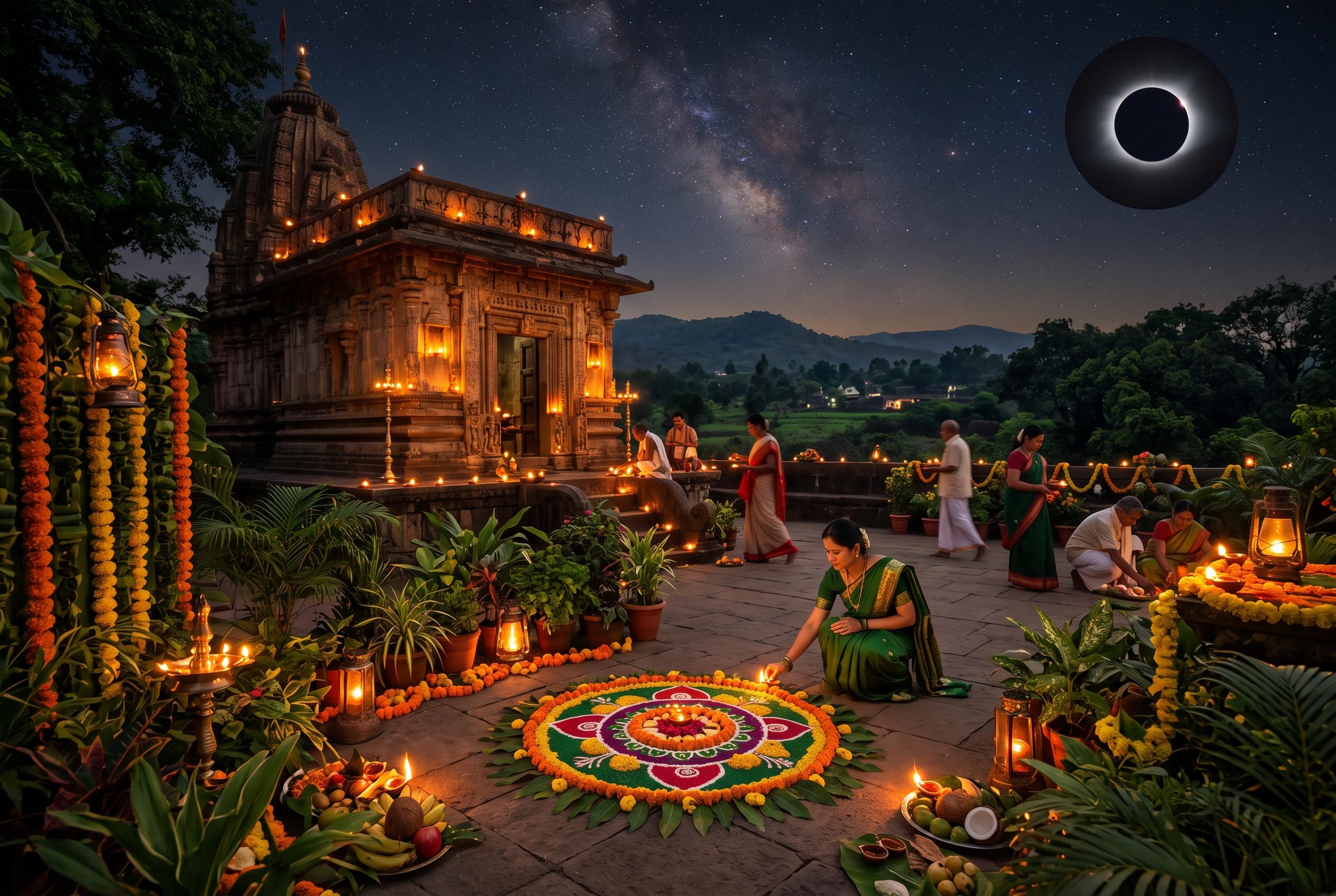

The overlap of Hariyali Amavasya with a total solar eclipse on 12 August 2026 has sparked questions about traditional rituals, but since the eclipse won’t be visible in India, customary observances can proceed without eclipse-related restrictions.
Hariyali Amavasya falls on 12 August 2026, the same day as a total solar eclipse, giving the date extra weight for people who follow the lunar calendar and its rituals. Informalnewz.com says the overlap has prompted questions about whether ancestor offerings should still be made, but the key practical point is simple: the eclipse will not be visible in India, so the usual Sutak restrictions are not considered applicable there. Timeanddate.com also places the eclipse on 12 August 2026 and tracks it as a global event with a defined path of visibility across other regions. According to the report, that means the day matters more for observance than for any local eclipse precaution in India.
For devotees, that leaves the focus on the Amavasya observance itself rather than on eclipse-related taboos. Informalnewz.com says customary acts such as prayers, charity and rites connected with ancestors remain part of the day’s importance. The Planetary Society, meanwhile, says the eclipse’s path of totality will sweep across Spain, Greenland and Iceland, with a maximum totality of about 2 minutes and 18 seconds, which helps explain why the event is drawing international attention even though it does not affect viewers in India in the same way.
Astronomy outlets say the eclipse will be notable for sky-watchers because of where it occurs in Solar Cycle 25. Space.com reports that the darkened sun may give observers a rare view of the corona, alongside other visible features such as sunspots and planets. Digital Camera World adds that safe viewing remains essential wherever the eclipse is visible, with proper solar glasses meeting the ISO 12312-2 standard. Those points matter mainly for people in the eclipse path, not for observers in India, where the event will not be seen directly.
The astrological commentary attached to the day is much broader, with Informalnewz.com suggesting that some practitioners see the eclipse as a moment for reflection on household harmony, ancestral duty and acts of service. That said, the only firm factual distinction here is visibility: because the eclipse is not observable in India, it does not trigger Sutak there, and Hariyali Amavasya can proceed under its normal religious framework. For anyone marking the date, that leaves a fairly neat rule of thumb: keep the spiritual observance, skip the eclipse anxiety.
Disclaimer: This content is intended for informational purposes only. Readers are advised to exercise their own judgement, conduct due diligence, or consult a qualified expert before acting on any information provided.