

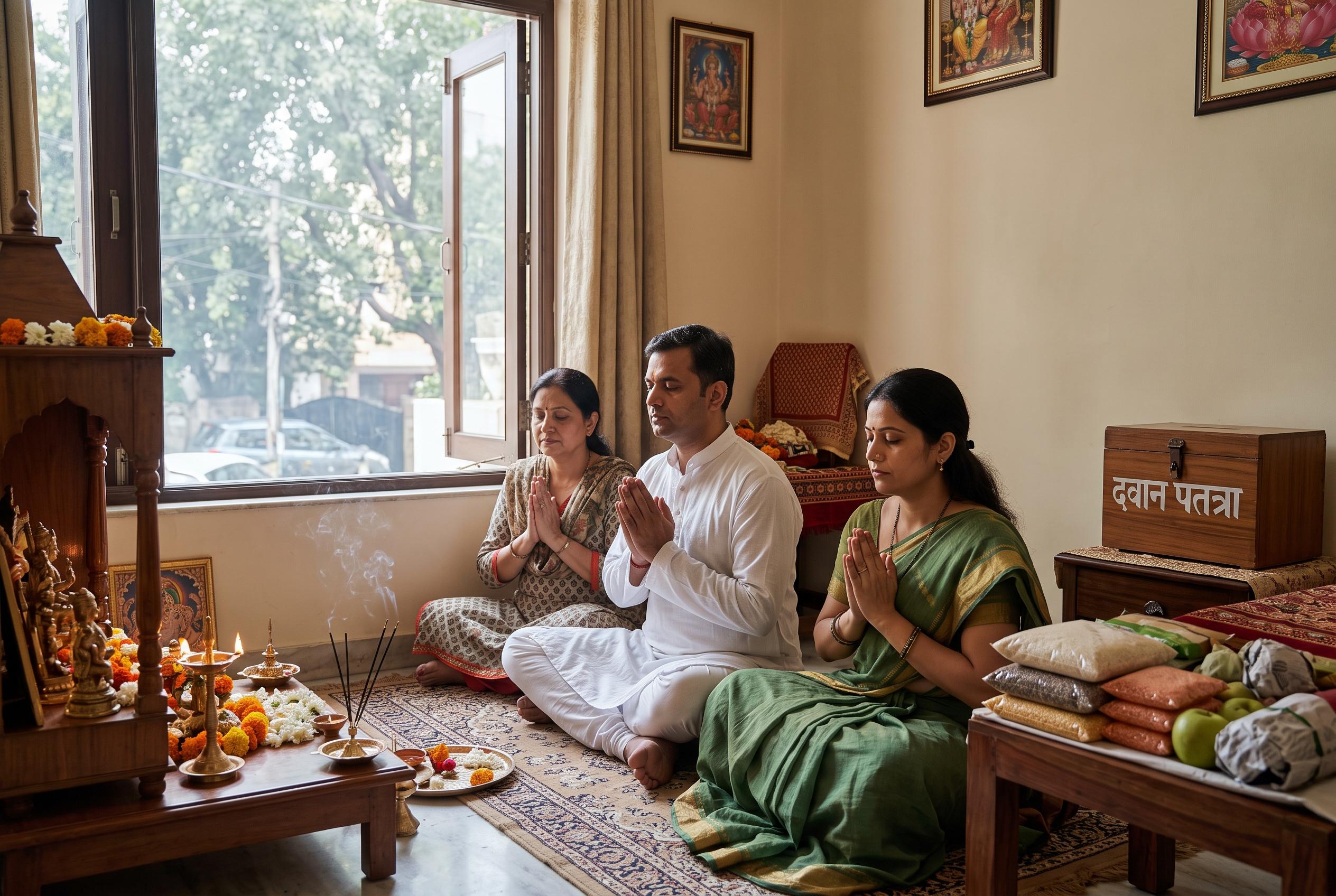

As the second solar eclipse of 2026 coincides with Hariyali Amavasya, Hindu households focus on devotional practices of introspection and charity, viewing the event as an opportunity for spiritual reset rather than fear.
For many Hindu households, an eclipse is not just a skywatching moment but a pause button for the day. That is especially true for the second and final solar eclipse of 2026, which falls on the night of August 12 and coincides with Hariyali Amavasya, a new-moon day that is already regarded as spiritually important. Narayan Seva’s guidance says the eclipse begins at 9.04pm Indian Standard Time and ends at 1.27am on August 13, lasting about 4 hours and 23 minutes.
The timing has drawn attention even though the eclipse will not be visible from India. That matters because, according to guides from AstroSage, Vedic Matrix, Shriram Temple and Nitya Panchangam, the traditional Sutak period is generally observed only in places where the eclipse can actually be seen. In practical terms, that means the August 12 eclipse is not expected to bring religious restrictions in India on eating, cooking or regular worship.
Still, eclipse day carries a strong devotional flavour in Sanatan tradition. Narayan Seva says the period is considered especially suitable for introspection, mantra chanting, meditation and acts of charity. The site recommends focusing the mind on a chosen deity and, for those devoted to Surya Dev, reciting the Surya Mantra: “Om Adityaya Vidmahe Divakaraya Dhimahi Tannah Suryah Prachodayat.”
The broader idea is simple enough: an eclipse is treated less as a cause for fear than as a prompt to turn inward. Other Hindu guides on eclipses describe the same pattern of practice, including quiet reflection, spiritual reading and self-discipline, while traditional dos and don’ts vary by region and by whether the eclipse is visible locally. After the eclipse ends, Narayan Seva says bathing and making donations of food, clothes or grain are considered auspicious.
Because the August 12 eclipse falls on Hariyali Amavasya in the Shravan month, it has a layered significance for believers. For devotees, that combination makes the night feel like a good moment for remembrance, restraint and service rather than routine celebration. In that sense, the eclipse is framed not as an event to dread, but as a chance to reset one’s focus.
Disclaimer: This content is intended for informational purposes only. Readers are advised to exercise their own judgement, conduct due diligence, or consult a qualified expert before acting on any information provided.