

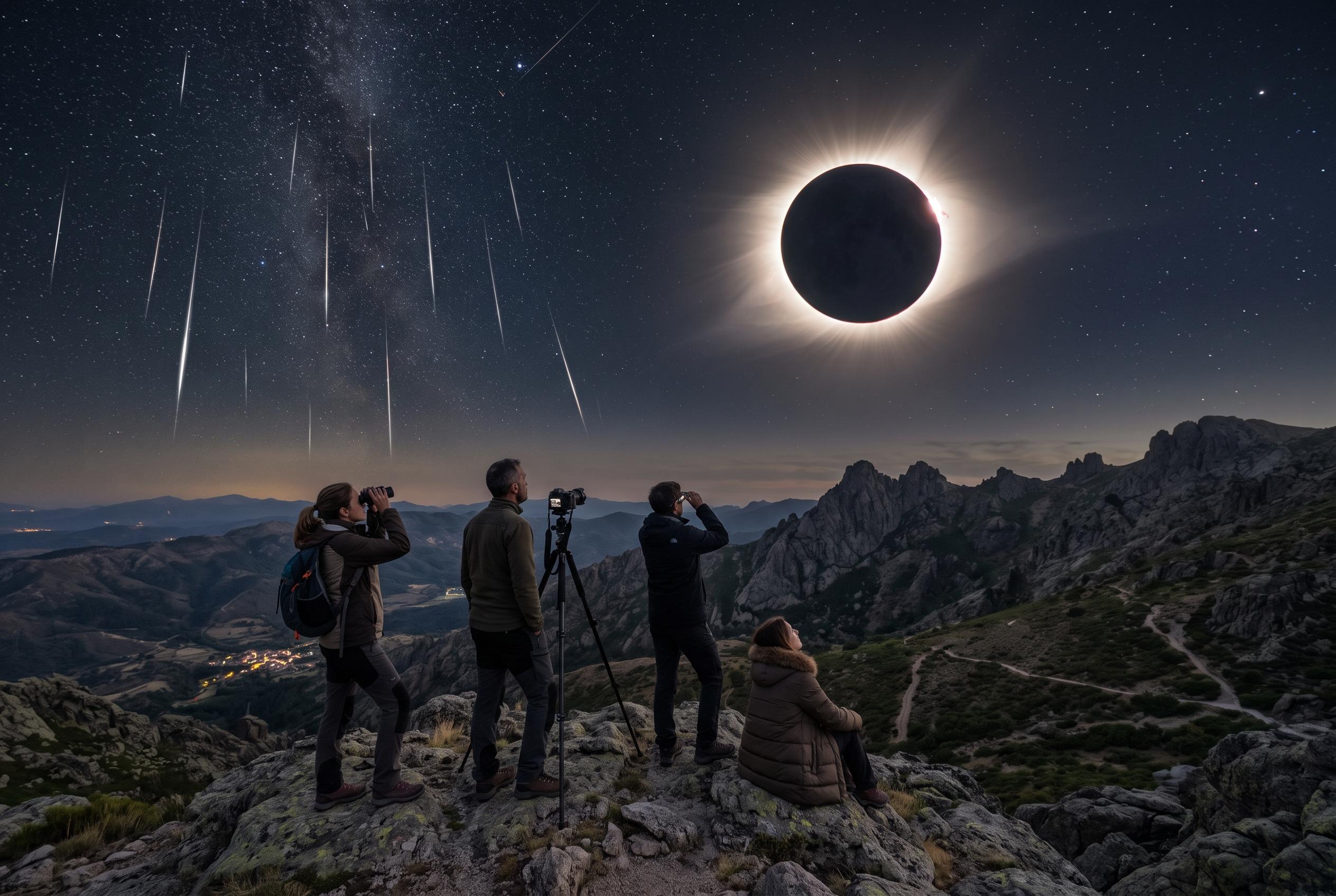

The August 12, 2026, solar eclipse offers an extraordinary celestial and spiritual event, with viewers across Europe, Greenland, and beyond preparing for a convergence of science and tradition amid the simultaneous Perseid meteor shower peak.
A rare solar eclipse is due on August 12, 2026, and AstroVed is framing it as both an astronomical spectacle and a spiritually charged moment for those who follow Vedic practice. In its guidance on Surya Grahan, the site says the event is associated with Cancer and Ashlesha Nakshatra, linking it with emotional clearing, ancestral themes and renewal. The eclipse itself is a straightforward celestial alignment: the Moon moves between Earth and the Sun, dimming or, for some observers, fully blocking the Sun’s light.
NASA says the path of totality will cross Greenland, Iceland, northern Russia, Spain and a small part of Portugal, while partial eclipse viewing will stretch across much of Europe, parts of North America and north-western Africa. Space.com adds that totality will also reach eastern Greenland, western Iceland and the Balearic Islands, underlining how wide the viewing footprint will be across the Northern Hemisphere. AstroVed says the eclipse will not be visible from India, but it has still set out a spiritual programme for devotees there, with an eclipse window running from 9.04pm IST on August 12 to 4.25am IST on August 13.
For believers, Surya Grahan is often treated as a time for prayer, mantra chanting, meditation, charity and ancestral offerings. AstroVed recommends practices such as Surya Preeti Homa, Nakshatra Shanti Homa, Udaka Shanti Japam, Sun Pooja and Tarpanam, which is a ritual offering for ancestors. The company describes these rites as a way to seek clarity, protection, balance and progress, while also encouraging simple fasting or sattvic food where health allows.
That said, the science side of eclipse watching is not optional. NASA stresses that people should never look directly at the partial Sun without proper eclipse glasses or a certified solar viewer, and that regular sunglasses are not enough. Cameras, telescopes and binoculars also need suitable solar filters. The only time direct viewing is safe is during the brief total phase, when the Sun is completely covered.
There is also a neat extra wrinkle for sky-watchers: the August 12 eclipse lands near the Perseid meteor shower peak, which has prompted some astrophotographers to plan for both events on the same night. That makes the date unusually rich for anyone interested in either science or symbolism. The practical advice remains the same, though: enjoy the spectacle safely, and treat the spiritual side as a personal tradition rather than a scientific claim.
Disclaimer: This content is intended for informational purposes only. Readers are advised to exercise their own judgement, conduct due diligence, or consult a qualified expert before acting on any information provided.