

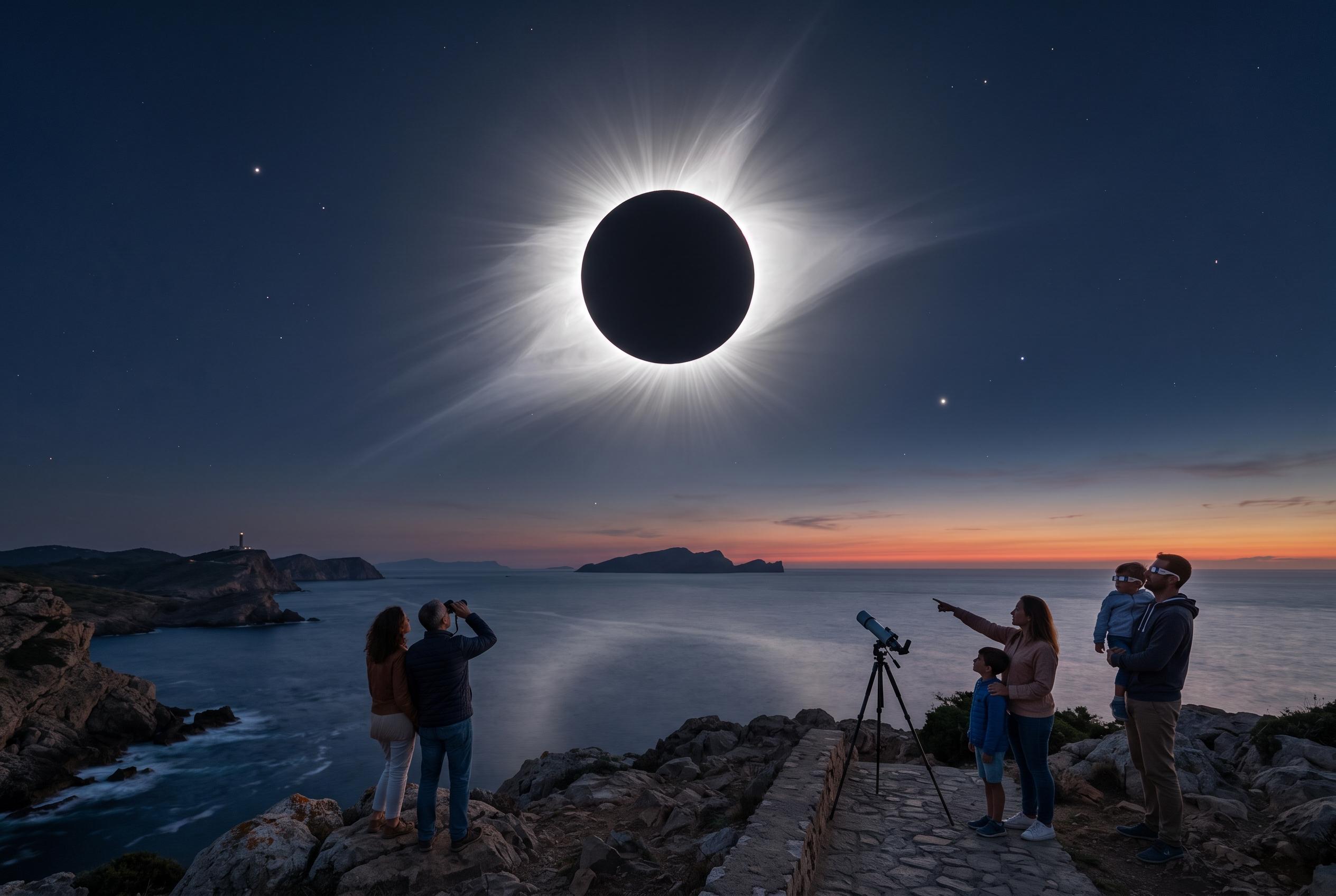

A total solar eclipse on 12 August 2026 will be visible across Greenland, Iceland, northern Spain, and the Mediterranean, offering an awe-inspiring event with traditional and scientific significance amidst careful planning and safety precautions.
A total solar eclipse will sweep across parts of the Northern Hemisphere on 12 August 2026, setting up one of the year’s most striking skywatching moments. AstroSage says the event is the second solar eclipse of 2026 and places it in Cancer, within Ashlesha Nakshatra, but the astronomy is the same old wow-factor: the Moon moves directly between Earth and the Sun and briefly turns daylight into something eerie and otherworldly. NASA and the European Space Agency both note that the eclipse will be visible across parts of Greenland, Iceland, northern Spain and nearby regions, with most observers outside the narrow path seeing only a partial eclipse.
For those in the path of totality, the show should be brief but memorable. Space.com reports that the path will stretch across the Arctic, eastern Greenland, western Iceland, northern Spain and the Balearic Islands before ending over the Mediterranean, while NASA says totality will last less than 2 minutes for most viewers. That makes planning worth the effort: the best view is reserved for a relatively slim corridor, and weather or low sun angles could still spoil the party even for people in the right place.
AstroSage also frames the eclipse through a traditional Hindu lens, where the Sun symbolises vitality, authority and consciousness and an eclipse is treated as a sensitive time. In that tradition, eclipse periods are often approached with restraint, and the site says the Sutak period is not considered applicable in India because this eclipse will not be visible there. In other regions where it can be seen, customary guidance includes avoiding major ceremonies, heavy travel and other auspicious beginnings during the eclipse window.
The website also lists a familiar set of devotional practices associated with eclipses, including mantra chanting, meditation and recitation of sacred texts. It recommends prayers to the Sun after the eclipse, along with bathing, cleaning the home shrine and giving charity. For pregnant women, AstroSage repeats traditional cautions such as staying indoors, avoiding sharp tools and resting quietly, though these are cultural practices rather than scientific safety advice.
On the practical side, the science is much simpler: do not look at the Sun without proper protection during the partial phases. NASA and Space.com both stress that certified eclipse glasses or approved solar filters are essential, with the only exception being the brief total phase when the Sun is fully covered. For anyone lucky enough to be in the right place on 12 August, it is one of those rare mornings or afternoons when sky, science and tradition all seem to be looking the same way.
Disclaimer: This content is intended for informational purposes only. Readers are advised to exercise their own judgement, conduct due diligence, or consult a qualified expert before acting on any information provided.