

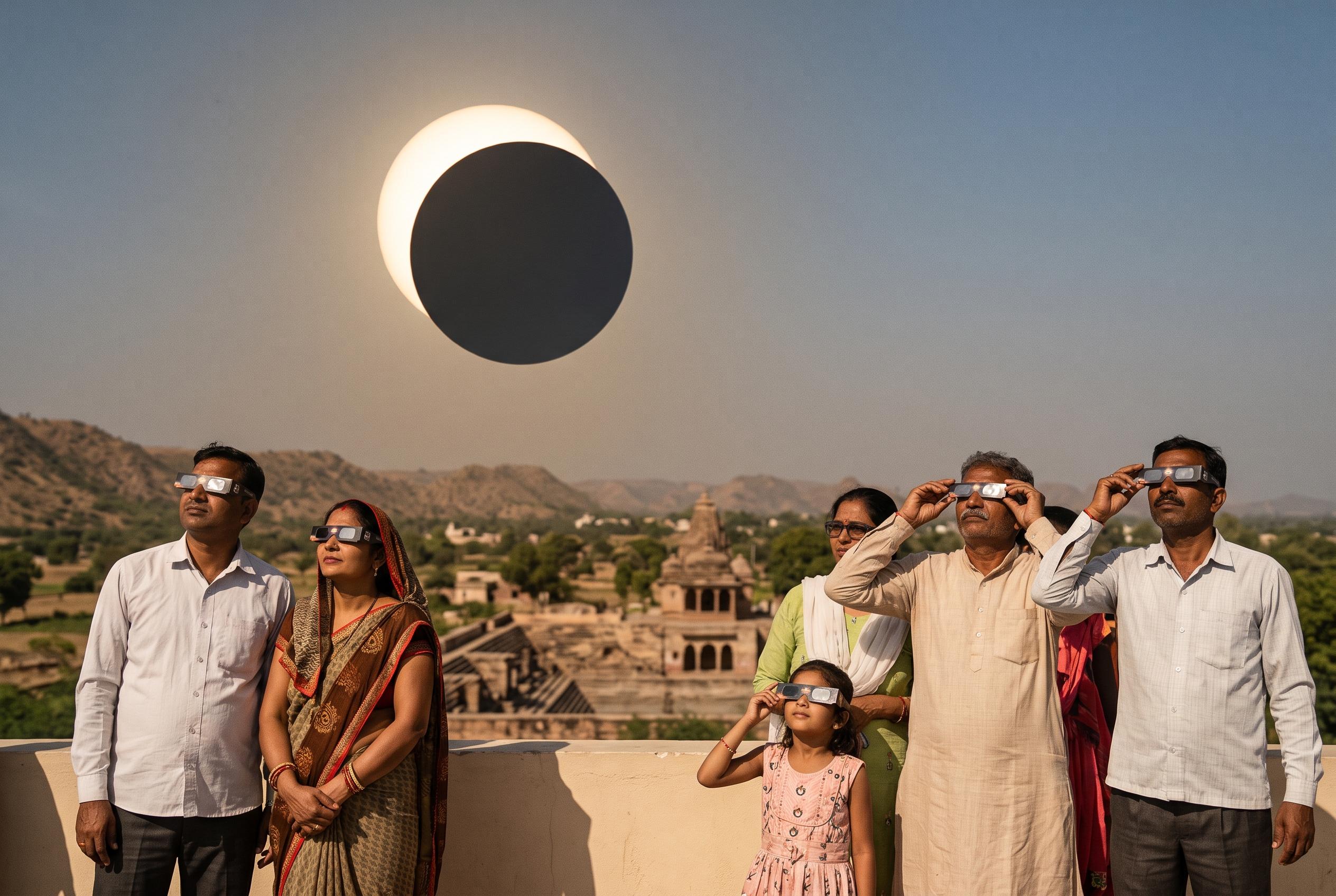

The second solar eclipse of 2026 occurs overnight on August 12-13, with limited visibility across India but expected to be a notable event in other regions, prompting both scientific and astrological attention.
The second solar eclipse of 2026 arrives overnight on August 12 and into the early hours of August 13, with Indian time placing the event from 9:04 pm to 1:27 am and its deepest point at about 11:16 pm. Aaj Tak says the eclipse is a total one and that, at around 10:29 pm, the Moon will cover nearly 90% of the Sun, though the sky show will not be easy to catch from India.
For most readers in India, the practical takeaway is straightforward: many reports say the eclipse will not be visible there, which means Sutak Kaal is not considered applicable and normal routines can continue. Zendaruniverse and The Economic Times both say the eclipse is set to be seen in other regions instead, including parts of southern Africa, South America and the Arctic or Europe, depending on the account.
That said, there is one wrinkle worth noting. Vedkosh says the eclipse may be partially visible in north-west India, including Gujarat, Rajasthan, Punjab and Himachal Pradesh, which sits uneasily beside other reports that say India will miss it altogether. In other words, the safest reading is that visibility depends on where you are looking from, and local circumstances may matter more than the broad headline.
Astrology-wise, Aaj Tak frames the eclipse as especially significant because it falls in Cancer and Shatabhisha nakshatra, with some practitioners reading that as a time when water-related events, politics and public life could feel more unsettled. The same report says devotees often respond with prayer, mantra recitation and charity rather than panic, and it also stresses that pregnant women do not need to treat the event as something automatically harmful.
On the practical side, the advice is much less mystical and much more useful. If you are in a place where the eclipse is visible, do not look at it directly without proper certified solar viewing glasses or an approved filter. Aaj Tak also notes that there is no scientific reason for healthy adults, children, older people or patients to fast during the event, and that food, water and everyday care should come first.
Disclaimer: This content is intended for informational purposes only. Readers are advised to exercise their own judgement, conduct due diligence, or consult a qualified expert before acting on any information provided.