

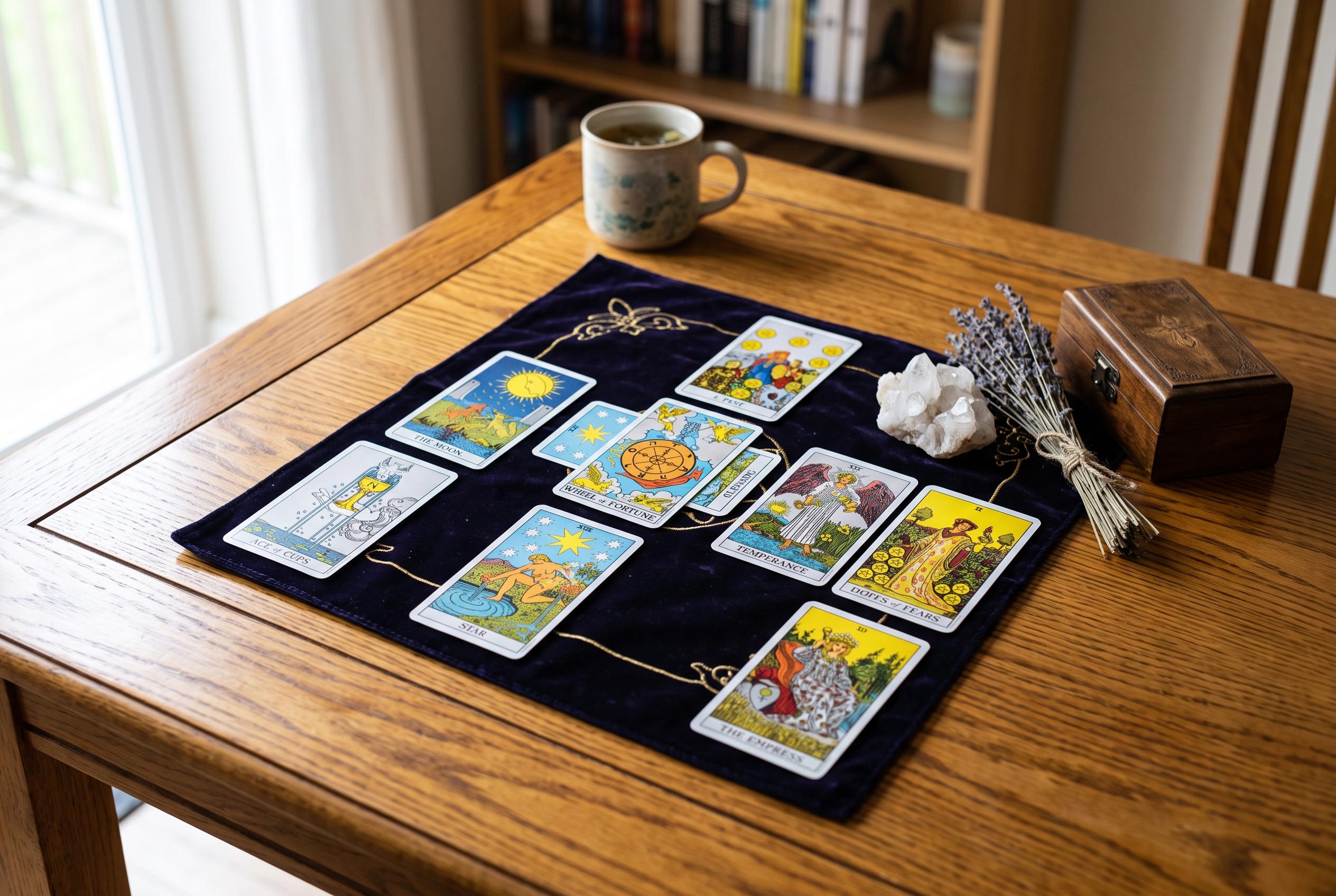

Tarot cards, often seen as a tool for fortune-telling, are increasingly being recognised for their role in fostering honest self-reflection during times of change, helping individuals navigate transitions by shining a light on inner transformations.
There are moments when life looks perfectly fine on paper and still feels strangely out of tune. You may be keeping up, doing the work, offering advice and holding everything together, yet something inside says the old version of you is no longer quite enough. That is where tarot can become less a fortune-telling game and more a mirror, a way of noticing what is changing before you have the language for it.
That idea sits comfortably alongside more structured self-development work. Tarot.com says its self-healing readings are built to uncover hidden blocks, family patterns and unconscious motives, which is a reminder that the cards are often used as prompts for reflection rather than instructions from on high. In that sense, tarot can work a bit like journalling or coaching: it does not hand you the answer, but it can help you hear your own thinking more clearly.
The symbolism is part of the appeal. The Death card is commonly read as a sign of endings, release and transformation, while The Empress often points towards self-nurture, creativity and a fuller sense of worth. The Chariot brings a different energy altogether, leaning towards focus, discipline and moving ahead with intent. Together, those cards sketch a familiar human pattern: letting go, recovering and then choosing a new direction with a little more conviction than before.
That is why tarot often shows up during periods of change, whether someone is rethinking work, trying to lead more thoughtfully or simply noticing that an old identity has started to feel tight. A card does not need to predict the future to be useful. Sometimes its real value lies in naming what is already stirring underneath the surface, especially when a person is standing between who they were and who they are becoming.
There is also something quietly practical about that approach. If a spread highlights resistance, fatigue or a need for support, the next step may be as simple as a boundary, a conversation or a break from overthinking. If it points towards vitality and clarity, as The Sun is often associated with, it can be a useful nudge to trust momentum rather than waiting for absolute certainty. Tarot works best, perhaps, when it helps people stay in conversation with themselves.
In the end, the question is not whether a card can magically fix a life transition. It is whether it can help create enough stillness for honest reflection. And for many people, that is already a pretty useful form of magic.
Disclaimer: This content is intended for informational purposes only. Readers are advised to exercise their own judgement, conduct due diligence, or consult a qualified expert before acting on any information provided.