

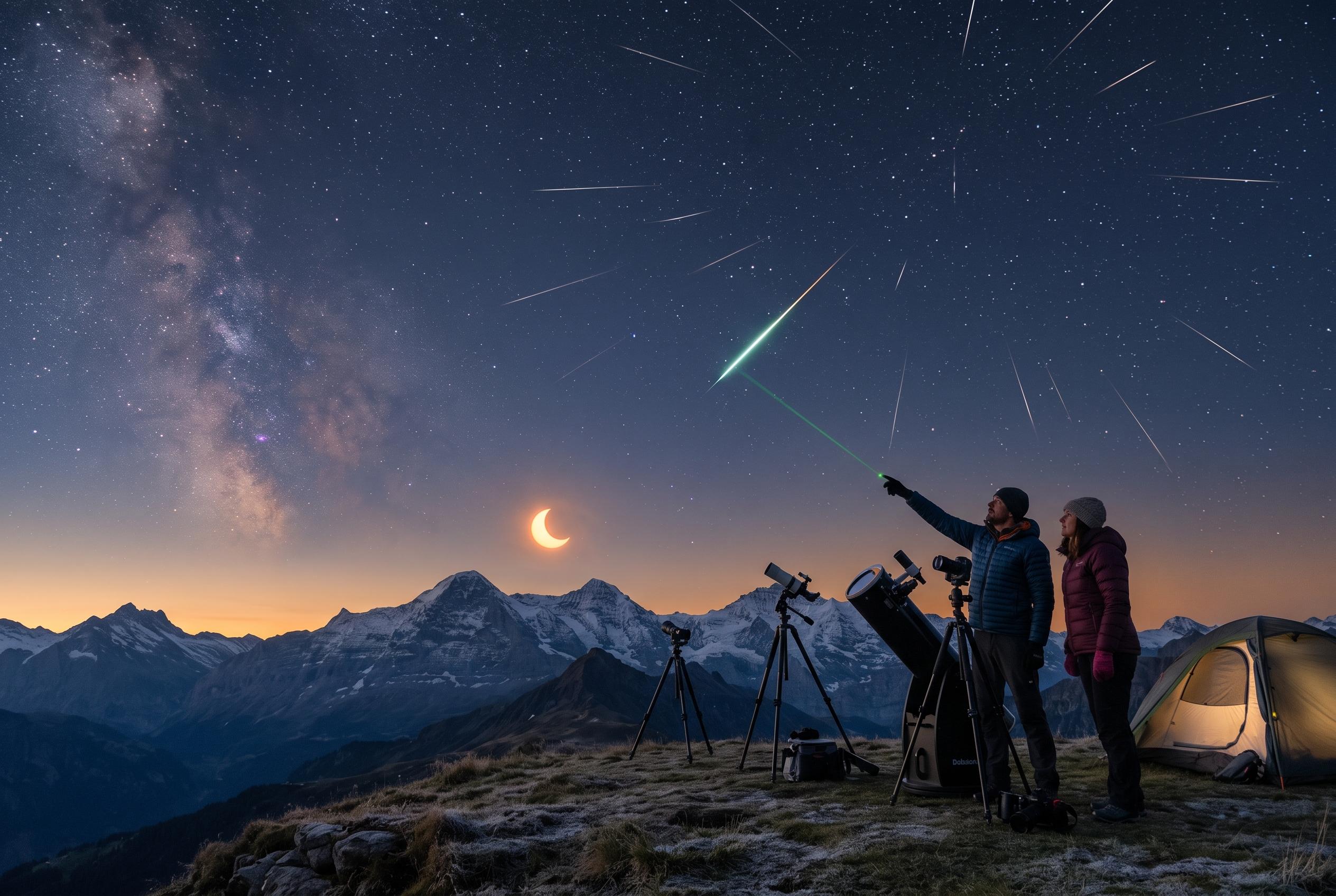

Sky enthusiasts are in for a spectacular evening as a partial solar eclipse coincides with the peak of the Perseid meteor shower, offering a rare opportunity to witness two celestial events in one night across much of Europe, including the UK.
Tonight’s sky is offering a neat double act: a deep partial solar eclipse at sunset, followed by the peak of the Perseid meteor shower after dark. For anyone willing to linger outside a little longer, it could be one of the more rewarding evenings for sky-watchers in years. According to NASA, the eclipse will be visible as a partial event across much of Europe, including the UK, while the most dramatic total eclipse will track across a narrower path elsewhere.
In London, Time and Date says the eclipse begins at 6:17 pm BST, reaches its maximum at 7:13 pm with just over 91% of the Sun covered and ends at 8:06 pm. NASA notes that in parts of the eclipse path the Sun will be setting while still partially obscured, which should make for a striking sunset view where skies are clear.
The timing is what makes tonight especially fun. The Perseids are already active through the middle of July into late August, but several astronomy guides say the shower reaches its best point on the night of August 12 into the early hours of August 13. With the Moon out of the way, the night sky should be darker than usual, which improves the odds of spotting fast, bright streaks overhead.
That is why stargazing fans are being urged not to pack up as soon as the eclipse ends. Dark-sky locations away from street lamps will give the best chance of seeing meteors, and experts recommend letting your eyes adjust for at least 15 minutes. Telescopes are not much help here; a wide, open view of the sky matters more than magnification when meteors can flash across any part of the heavens.
One important caveat: do not look directly at the Sun, eclipse or not. Safe solar viewing means using proper eclipse glasses or another approved projection method, such as a pinhole projector. For everyone else, the simple plan is this: catch the eclipse, stay outside, and see what the night still has in store.
Disclaimer: This content is intended for informational purposes only. Readers are advised to exercise their own judgement, conduct due diligence, or consult a qualified expert before acting on any information provided.