

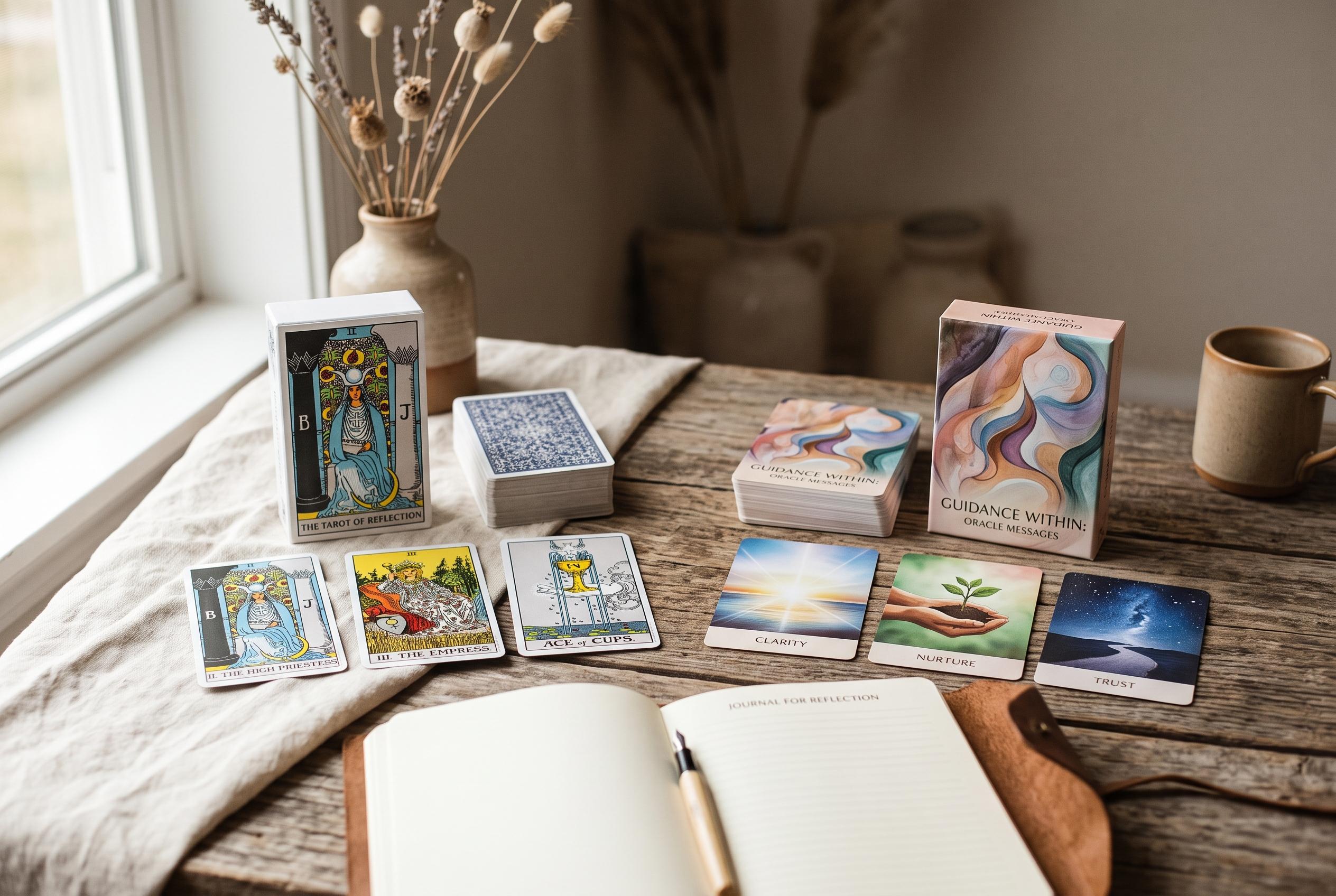

Exploring the unique qualities of tarot and oracle cards, and how they can be combined to enhance personal reflection and decision-making.
If you have ever stared at a spread and wondered whether you were meant to be reading symbols, feelings or both, the tarot-versus-oracle debate is probably part of the answer. The two styles overlap in purpose, but they do not work in quite the same way. According to Soul 2 Path, both can be used for reflection and intuitive support, yet each serves a different kind of question.
Tarot is the more traditional system. As Astrology.com and other tarot guides note, a standard deck contains 78 cards: 22 in the Major Arcana and 56 in the Minor Arcana. That structure gives tarot a built-in grammar, with the Major Arcana pointing to bigger turning points and the Minor Arcana dealing more with everyday moods, choices and pressures. In practice, that means tarot often feels best when the situation is layered and you want to explore the moving parts.
Oracle cards, by contrast, are far freer. There is no fixed card count, no universal suit system and no single template the decks must follow. As several comparison guides explain, one oracle deck might focus on angels, another on animals, moon phases, affirmations or personal healing. That flexibility is part of the appeal: the creator sets the theme, and the cards tend to speak in a simpler, more direct voice.
That difference matters when you are looking for guidance. Tarot usually offers more depth because its symbolism has a long-established framework, which can help a reader build a fuller picture of a relationship, career decision or emotional crossroads. Oracle cards tend to feel more immediate and comforting, especially when you want a gentle nudge rather than a detailed breakdown. Soul 2 Path says that can make oracle decks especially useful when you are tired, overwhelmed or just looking for a softer kind of reassurance.
Neither system is automatically better, and that is probably the point. If you enjoy structure, pattern and symbolism, tarot may feel like home. If you prefer plain-language prompts and quick intuitive insight, oracle cards may be easier to connect with. A lot depends on what kind of question is on the table and how much detail you want back.
The good news is that you do not have to choose one forever. Many readers use both together, with tarot helping to map the situation and oracle cards adding a clear takeaway. That combination can work well when you want both context and a practical next step. As one tarot guide put it, the formats can complement each other rather than compete.
However you use them, the most useful reading is usually the one that leaves you clearer, calmer and a bit more connected to your own judgement. Cards can open a conversation, but they do not replace your agency. In other words: tarot may help you understand the story, oracle may help you hear the message, and you still decide what to do next.
Disclaimer: This content is intended for informational purposes only. Readers are advised to exercise their own judgement, conduct due diligence, or consult a qualified expert before acting on any information provided.