

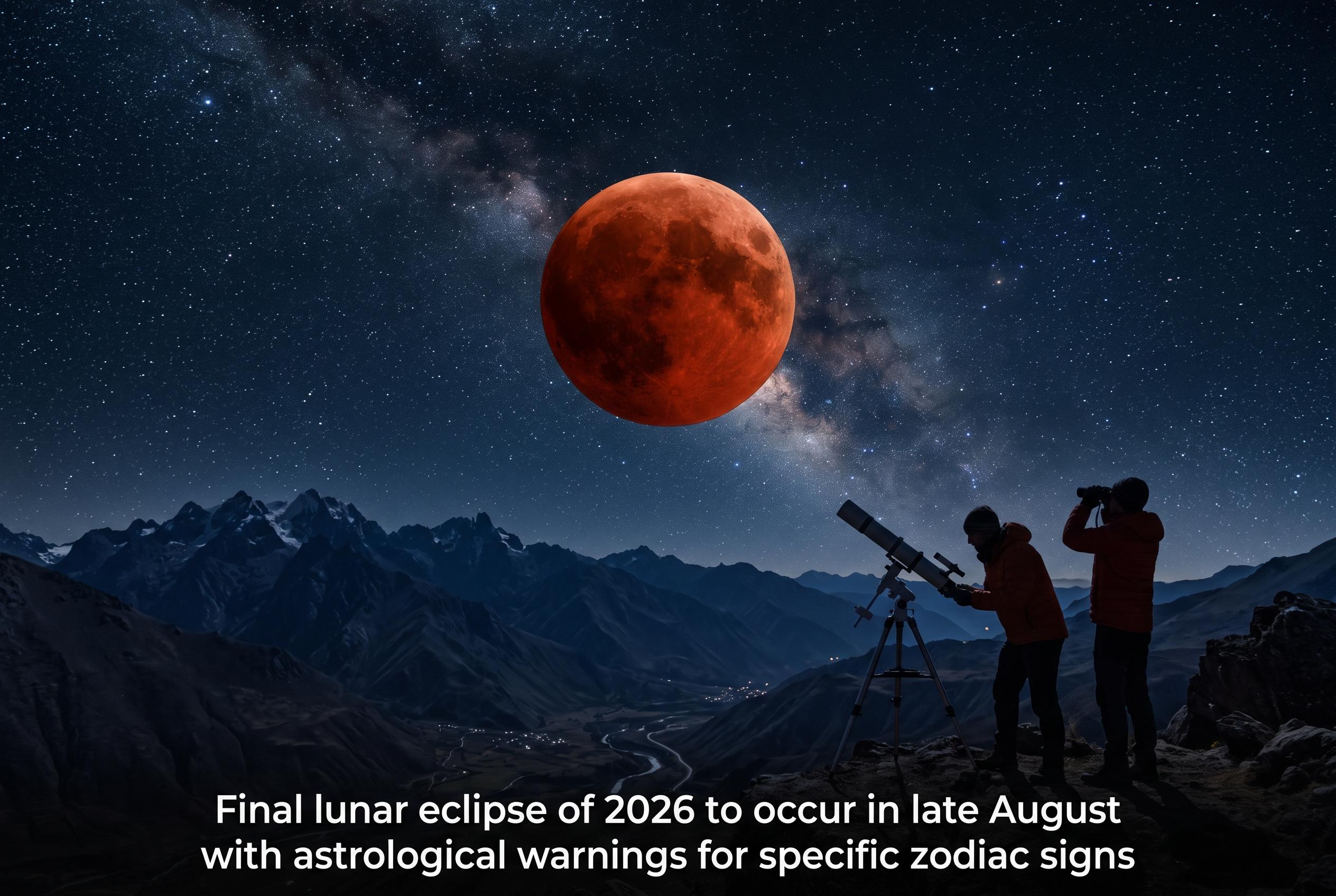

The last lunar eclipse of 2026 will take place on 28 August, with visibility limited globally. While India won’t see the event, astrologers highlight heightened emotional sensitivities for five zodiac signs, urging caution and reflection during this cosmic phenomenon.
The second and final lunar eclipse of 2026 is due on 28 August, and according to TV9 Hindi it will be a partial eclipse that peaks in the morning in India. Astronomical guides from Space.com and Live Science place the event overnight on 27–28 August, with the deepest part of the eclipse visible across the Americas and only partly from Europe and Africa, underscoring that this is very much a global sky show, even if it is not one everywhere at the same time.
For viewers in India, the practical headline is that the eclipse will not be visible, so traditional sutak observances are not considered applicable there. Even so, astrology-minded readers often treat lunar eclipses as moments when emotions, routines and judgement can feel a bit more intense than usual. That is a belief, not a scientific certainty, but it is the frame used by the TV9 Hindi piece.
In that astrological reading, five signs are said to need extra care: Cancer, Scorpio, Taurus, Leo and Pisces. The advice is fairly familiar eclipse-season guidance: avoid overthinking, keep an eye on money, speak carefully, and do not rush into arguments or major decisions.
Cancer is described as the most sensitive to the event because the Moon rules the sign, so mood swings and emotional wobbliness are the main watch-outs. Scorpio is flagged for possible tension around shared finances, family friction or hidden opposition. Taurus is advised to be especially measured with words and lending money.
Leo is urged to stay tactful in the workplace, particularly in conversations with bosses or senior colleagues. Pisces, meanwhile, is linked to health, impulse spending and unnecessary purchases. The common thread is simple: slow down a touch, double-check the details and keep things steady.
That softer, more reflective approach fits the broader tone of eclipse stories around the world: NASA-style astronomy coverage focuses on timing, visibility and shadow mechanics, while astrology adds a symbolic layer about change and release. If you follow the latter, this eclipse is being cast as a moment to notice habits, not panic about them.
Disclaimer: This content is intended for informational purposes only. Readers are advised to exercise their own judgement, conduct due diligence, or consult a qualified expert before acting on any information provided.