

Recent insights challenge traditional views of Life Path 6, revealing its darker shadows of over-functioning and burnout amid a contemporary focus on care and high standards. New research underscores the real-world toll of caregiving burdens and suggests a broader, more nuanced understanding of this archetype.
The newer crop of Life Path 6 explainers is trying to rescue the number from its own halo. Rather than casting sixes as endlessly patient saints, recent numerology guides are much sharper about the catch: this is a pattern associated with care, duty and high standards, but it can just as easily tip into over-functioning, martyrdom and control. KnowTheAngels puts the caveat plainly, saying numerology describes tendencies rather than fate, while Numerologist argues that the six is less a cuddly stereotype than a demanding balancing act. (knowtheangels.com)
The symbolic backbone, though, is still familiar. Numastra describes Life Path 6 as the Nurturer, tying it to Venus, the earth element and the lucky numbers 6, 15, 24 and 33. In that reading, six is relational by default: the person who wants people to feel safe, held and looked after. Hans Decoz, writing from a more traditional numerology angle, paints a similar figure – a caretaker, helper and healer who often ends up maintaining harmony for a family or group, and who has a habit of stepping into the space others leave behind. (numastra.com)
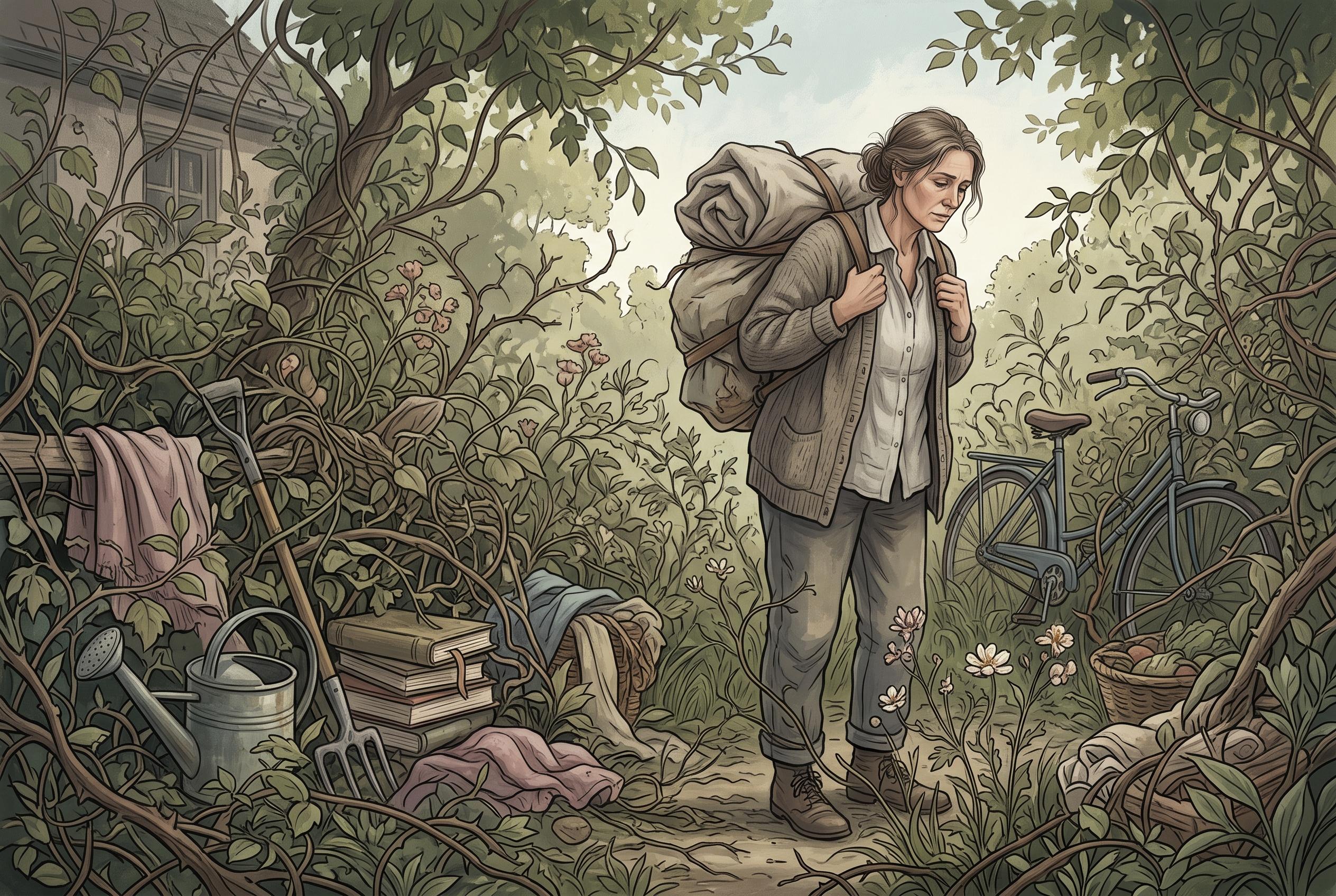
Where the more interesting sources push further is on the shadow side. KnowTheAngels says responsibility can harden into “invisible debt dynamics”, with care becoming a way of making oneself necessary or quietly keeping score. Its distinction between healthy service and overextended service is useful: one strengthens the other person, the other creates dependence. Decoz arrives at much the same warning from older numerology language, arguing that some sixes “need to be needed” and may be drawn towards people who seem weak, wounded or especially rescue-able. (knowtheangels.com)
That matters because not every six fits the easy domestic label. Numerologist explicitly pushes back on the idea that this number always shows up as homemaking or parental energy, saying artists, healers and spiritually minded people may carry the same pattern without looking remotely suburban. It roots that broader reading in older traditions, placing six at the centre of the Tree of Life and describing it as a number of beauty and synthesis. The site also revives the old mathematical fascination with six: among the numbers from one to 10, it is the only one whose divisors add up to itself, hence the classical phrase “neither wanting, nor abounding”. (numerologist.com)
Even readers who do not take numerology literally may recognise why this archetype sticks. A 2023 Journal of Medical Internet Research paper on women in medicine and science surveyed 6,466 health workers at a large US academic medical centre in 2022 and found that caregiving exhaustion had not simply vanished with the acute phase of the pandemic. Nearly 23% of women reported lingering exhaustion linked to caregiving responsibilities, compared with 14% of men, and the researchers found that lower perceived organisational support was associated with greater exhaustion. Their argument was not mystical at all: hidden care burdens are real, and workplaces that fail to support them pay the price in burnout and retention. (jmir.org)
A separate 2023 study in the International Journal of Aging and Human Development reached a similarly sobering conclusion from another angle. According to the abstract indexed by PubMed, 29% of adults in the US care for children, and between 12% and 24.3% of those adults are also providing unpaid care to one or more adults, placing them in the so-called sandwich generation. The study found that sandwich-generation carers and people caring for parents reported significantly higher informal caregiving burnout than carers of children, while all carers reported higher personal burnout than non-carers. In other words, the feeling of carrying too much is not just a numerology trope; there is a measurable version of it in ordinary life. (pubmed.ncbi.nlm.nih.gov)
The career advice attached to Life Path 6 also looks stronger when it moves beyond the usual list of nice, helpful jobs. KnowTheAngels says the best fit is not simply a caring profession but any role that rewards compassion, practical skill and a sense of quality without demanding self-erasure. Numerologist makes the same case differently, arguing that other core numbers may make one six a family anchor and another a restless creative. Decoz adds a twist missing from softer modern explainers: alongside the caregiving streak, he says sixes can have real business ability, charm and charisma. That makes the type sound less like a volunteer rota and more like a person who can build trust, hold standards and still get things done. (knowtheangels.com)
Taken together, the most convincing version of Life Path 6 is not a promise of sainthood and certainly not a sentence to burnout. It is a reflective shorthand for a recognisable habit: seeing what is fraying, wanting to mend it, and sometimes taking far too much of that work personally. For anyone using numerology as a tool rather than a verdict, that may be the most useful takeaway of all. The number can point to a pattern, as KnowTheAngels says, but “the pattern is not the person”. (knowtheangels.com)
Disclaimer: This content is intended for informational purposes only. Readers are advised to exercise their own judgement, conduct due diligence, or consult a qualified expert before acting on any information provided.