

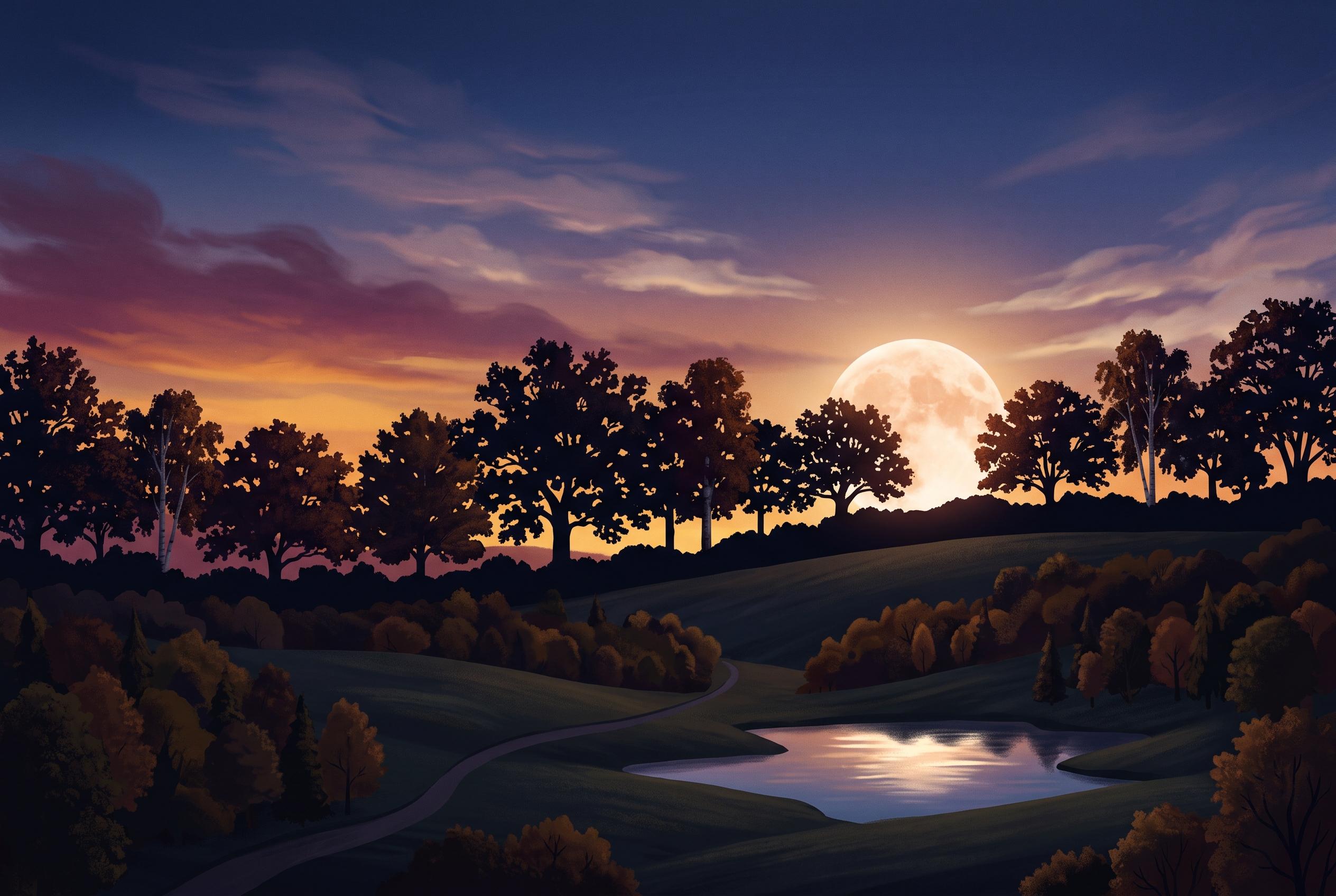

October’s full Hunter’s Moon reaches peak illumination early on 26 October, but skywatchers may get the most striking view as it rises above the eastern horizon the previous evening.
The Hunter’s Moon is set to light up October skies on Monday, 26 October, and the timing makes it one of those easy, low-effort skywatching moments that can still feel a little magical. NASA’s October skywatching guide places the full moon on that date, while The Old Farmer’s Almanac says peak illumination arrives at 12.12 a.m. EDT. For anyone hoping to catch the best view, the sweet spot is actually the previous evening, Sunday, 25 October, around sunset, when the moon is beginning its climb over the eastern horizon.
That advice matters because the horizon is where the spectacle tends to look its best. An open viewing spot with no buildings, hills or trees in the way gives the moon room to rise in full view, and no telescope is needed to enjoy it. Weather permitting, the moon will look full throughout the night and remain nearly full on the surrounding evenings too, which means Monday offers a second chance if Sunday’s skies do not cooperate.
The Hunter’s Moon gets its name from the traditional seasonal rhythm of autumn, when hunters once relied on the extra light to track game after the harvest had cleared the fields. It follows the Harvest Moon, carrying that same practical link between the lunar cycle and the farming calendar. According to the Almanac, the name has endured because it captures a very specific time of year, when nights lengthen and the sky becomes part of daily life again.
Expect the moon to put on a bit of a show as it rises. Near the horizon, it can take on a yellow or orange tint because its light is travelling through more of Earth’s atmosphere, which scatters the shorter blue wavelengths first. It may also appear unusually large, though NASA notes that this is simply an optical illusion rather than a genuine enlargement. Despite chatter about October kicking off a sequence of three supermoons, NASA’s calendar does not include this one, and the next listed supermoon events are in November and December. The moon will then move into its waning gibbous phase as Halloween approaches, slowly losing its bright surface each night.
Disclaimer: This content is intended for informational purposes only. Readers are advised to exercise their own judgement, conduct due diligence, or consult a qualified expert before acting on any information provided.