

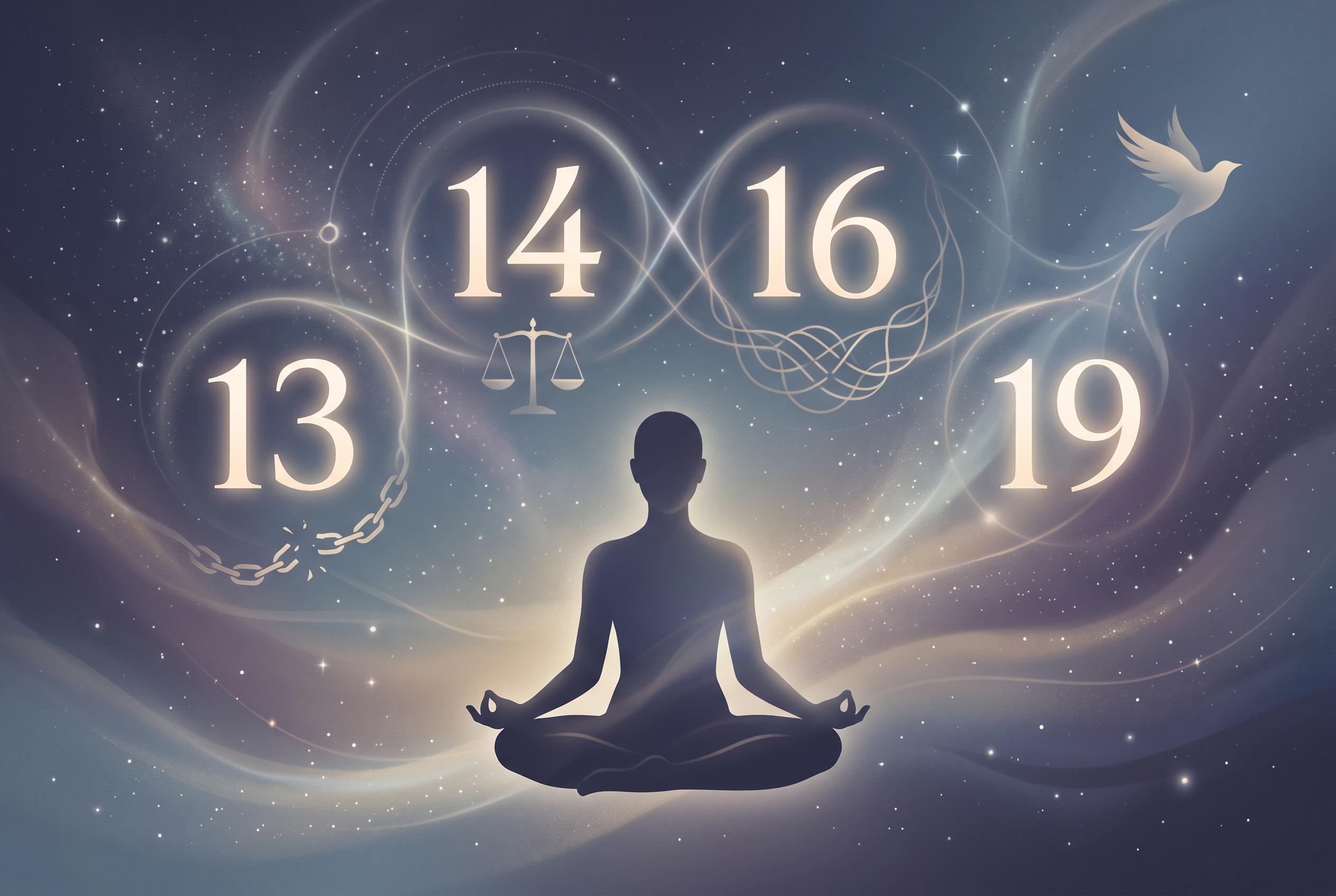

Numerology traditions associate 13, 14, 16 and 19 with recurring challenges involving discipline, freedom, relationships and independence , though the system is based on belief rather than scientific evidence.
Karmic numerology is the sort of idea that invites a double-take: are these numbers really about fate, or are they just a symbolic way of making sense of repeating patterns? According to Aufeminin, the tradition singles out a small set of numbers as markers of recurring lessons, especially around relationships, work and the kind of personal habits people keep bumping into. It is worth saying upfront that this is not science; as the Ukrainian article notes, astrology, numerology and similar practices are rooted in belief and interpretation rather than evidence, so they are best treated as a reflective or entertaining lens rather than a decision-making tool.
The numbers most often flagged in Pythagorean-style numerology are 13, 14, 16 and 19, which many readers know as karmic debt numbers. Guides from Number Alchemy, Karmic Calc and the Professional Numerology Association all describe them less as punishments and more as symbolic prompts to work on specific qualities. In that reading, 13/4 points to patience and steady effort, 14/5 to freedom with boundaries, 16/7 to ego checks and rebuilding after instability, and 19/1 to learning independence without sliding into self-centredness.
Some numerology schools also broaden the picture. The Ukrainian piece says 12, 15 and 18 are often treated as shadow numbers, while Numerology Portrait explains that different schools do not always interpret these figures in exactly the same way. That matters because, in this system, the method you use can change the result. What one practitioner frames as a karmic debt, another may treat as a potential strength or a lesson in disguise.
The basic idea is simple enough to follow. As several of the specialist guides explain, numbers are usually reduced by adding their digits until a single figure remains, although many readers leave master numbers such as 11, 22 and 33 intact. A birth date can therefore reveal one of these karmic figures either directly or as part of the calculation. People born on the 13th, 14th, 16th or 19th of the month are often told to pay special attention, but the same numbers can also appear elsewhere in a numerology chart.
Supporters of the approach say the real value lies in pattern-spotting rather than prediction. A repeated 13 may be read as a sign of effort around career or material stability, 16 as a lesson in abrupt relationship change, and 19 as a theme of power, autonomy and responsibility. If that sounds a little mystical, that is because it is. Still, for anyone who enjoys numerology, the appeal is easy to see: it offers a neat framework for thinking about recurring challenges, and sometimes that alone is enough to make a person reflect.
Disclaimer: This content is intended for informational purposes only. Readers are advised to exercise their own judgement, conduct due diligence, or consult a qualified expert before acting on any information provided.