

Across tarot traditions, The Lovers can signify attraction and partnership, but its deeper message is about values, inner alignment and the choices that shape a life.
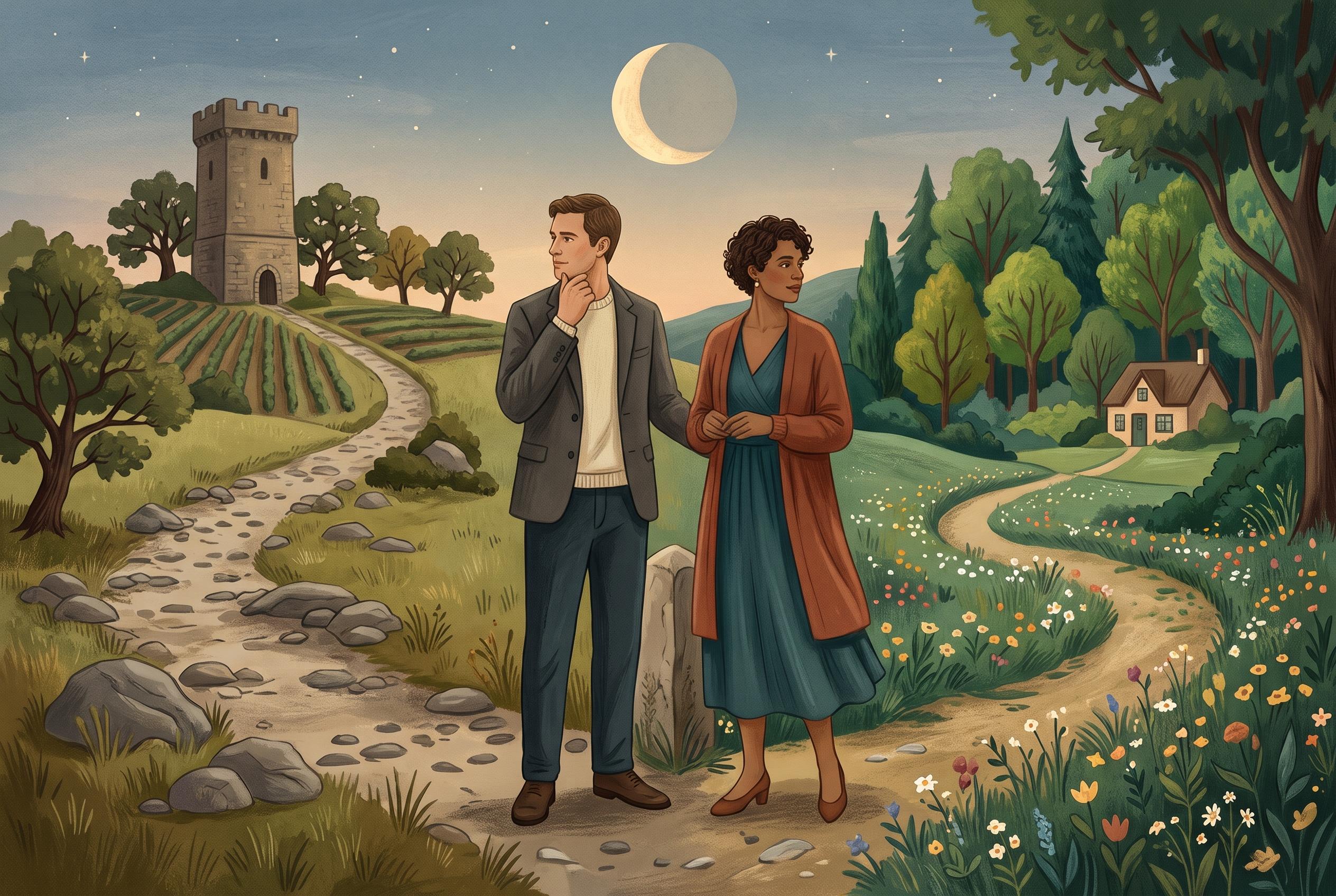
The Lovers is one of tarot’s most misunderstood cards. It is often reduced to a simple romance symbol, but that flattens what is really a much richer image: a card about choice, inner alignment, attraction, and the uneasy but necessary act of deciding what kind of life you actually want. In tarot reading, that makes it less of a fairy-tale card and more of a fork in the road.
According to the Victoria and Albert Museum, tarot developed from a card game into a system later associated with divination and occult thought, with later writers adding numerology and Kabbalistic ideas into the mix. That broader history helps explain why The Lovers has never been fixed to just one meaning. In different decks and traditions, it can stand for mutual feeling, partnership, temptation, moral tension, or the need to reconcile opposites rather than pretend they do not exist.
In the Rider–Waite–Smith tradition, the card is usually read through the story of Adam and Eve, with the angel above them, the serpent, and the two trees creating a scene that is as much about conscience as chemistry. The Victoria and Albert Museum notes that Pamela Colman Smith’s artwork helped shape the deck’s lasting influence, and that The Lovers has appeared in several visual forms across history. That matters, because the card’s imagery is not a universal photograph of romance; it is a symbolic language that shifts with the deck.
That symbolic language becomes even clearer when you compare traditions. The museum’s collection examples show older Marseille-style versions of L’Amoureux, while the Rider–Waite–Smith image leans into biblical and spiritual symbolism. In the Thoth tradition, as reflected in a booklet on the deck, The Lovers is linked to Gemini and the Hebrew letter Zain, with the card framed as an alchemical union of opposites. In other words, some readings stress attraction, while others lean into dialogue, analysis, and the merging of different energies.
The Russian article also reflects that wider interpretive range by treating The Lovers as a card of decision-making in love, work, values, and self-definition. That is a useful reminder for readers who only associate it with a relationship question. In practice, it can point to a promising connection, but it can just as easily highlight a choice between two paths, two loyalties, or two versions of yourself. The card’s real message is often less “Will this happen?” and more “What are you choosing, and why?”
In love readings, The Lovers in upright position is usually taken as a sign of mutual attraction, openness, and a bond that feels deliberate rather than accidental. The card can suggest a developing relationship, a serious conversation, or a step that moves a couple from feeling into commitment. Reversed, it tends to point towards mixed signals, emotional imbalance, fear of responsibility, or a mismatch between desire and action. Even then, it does not automatically mean separation; it more often says that clarity is missing.
The card’s broader symbolism also makes it useful in work and practical life readings. It can indicate partnership, a shared project, or a moment when two possible directions both seem appealing. That is where the card’s pressure really shows up: not every choice is between good and bad; sometimes it is between two decent options, each with its own cost. The point is not to rush towards whichever sounds easiest, but to notice which option actually fits your values.
Historically, that idea of values sits close to the card’s esoteric roots. The French National Library records Papus’s Le Tarot divinatoire, published in Paris in 1909, as a tarot guide that covered the Major and Minor Arcana and belonged to the occult revival of its time. That context matters because modern tarot meanings did not appear from nowhere. They were built over time by writers, artists, and readers who treated the cards as both mirrors and maps.
So if The Lovers turns up in a reading, the most helpful response is not to ask only whether love is on the way. It is to ask what kind of union, decision, or internal truce the card is asking you to make. The card is at its strongest when it is read as a prompt for honest choice: between fear and trust, convenience and conviction, impulse and alignment. That is what gives it its staying power, and why it remains one of tarot’s most layered cards.
Disclaimer: This content is intended for informational purposes only. Readers are advised to exercise their own judgement, conduct due diligence, or consult a qualified expert before acting on any information provided.