

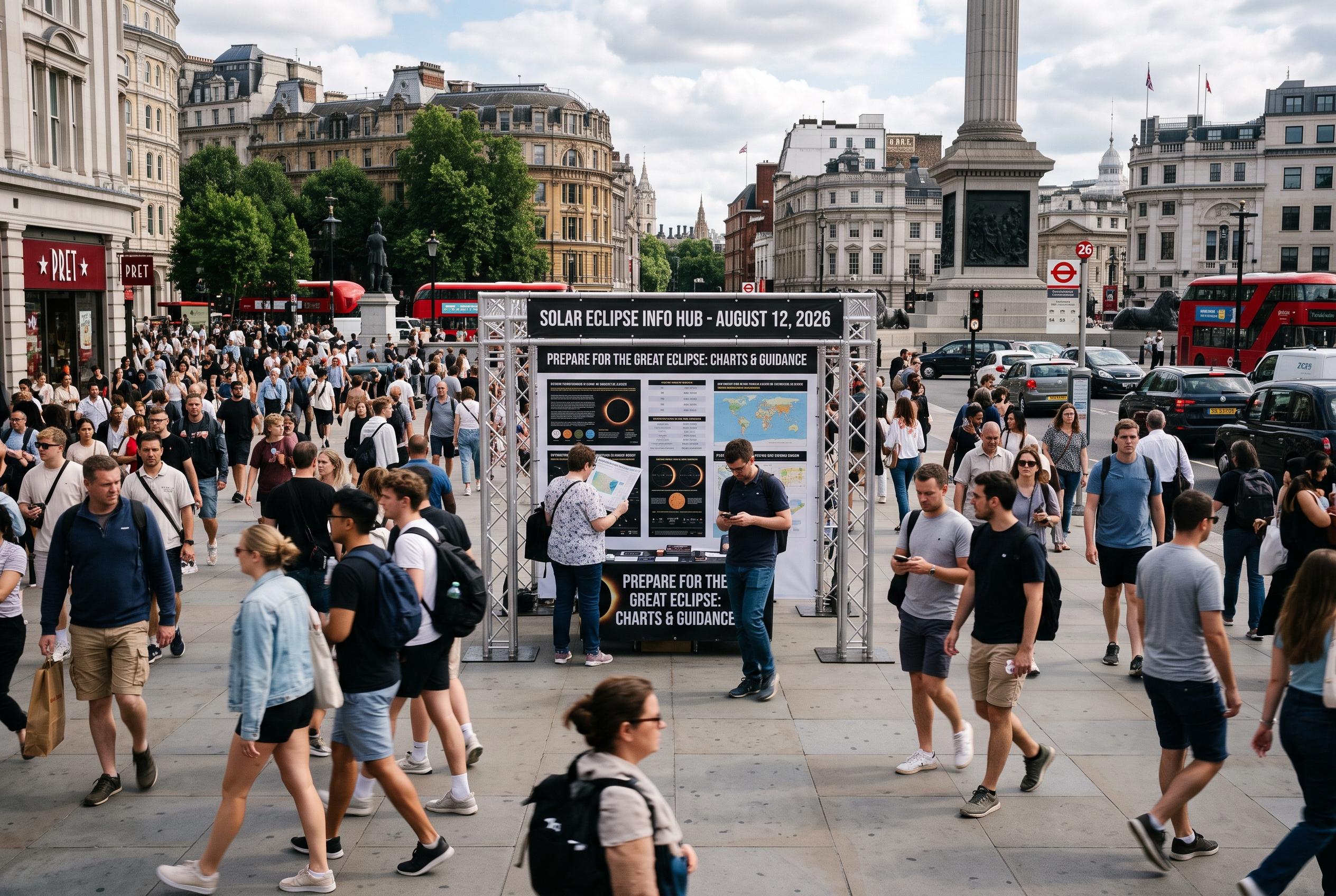

Astrologers and researchers warn of potential social, environmental, and political disruptions surrounding the August 2026 solar eclipse, linking celestial patterns to seismic activity and global tensions amid a backdrop of uncertainty.
Astrology writer Dale has cast the total solar eclipse of 12 August 2026 as a moment laden with symbolic pressure, linking it to themes of upheaval, conflict and public anxiety. The eclipse is expected to cut across the Arctic, Greenland, Iceland and northern Spain, with a wide partial eclipse visible across much of Europe and North Africa, according to eclipse data collated by Wikipedia and other astrology sites. In that broader reading, the event closes a Leo-Aquarius eclipse sequence and is framed by some astrologers as a period of release rather than fresh beginnings.
The article places particular emphasis on the significance of planetary positions in 2026, especially Neptune’s move into Aries and the implication, in the writer’s view, that a slow-moving outer planet entering the first degree of a cardinal sign could signal a break from the recent past. That interpretation is not conventional astronomy, but it is consistent with a long astrological tradition that reads ingress points and eclipse paths as markers of collective change. Astrogiagraphy’s 2026 transit guide also identifies the August eclipse as part of a run of notable alignments that month, including Mars square Neptune and Venus sextile Jupiter.
Dale’s most forceful warnings centre on seismic risk. The piece argues that earlier quakes in California, Japan and Venezuela illustrate a pattern that may intensify around eclipse seasons, and it invokes a recent observational study on lunisolar eclipses and seismic probability as supporting context. That study, hosted on ResearchGate, claims to examine 100 events between 1950 and 2026 and to identify temporal markers associated with elevated seismic likelihood during eclipse periods. The article goes further, however, treating those ideas as a basis for psychological preparation rather than a strict prediction.
The eclipse is also read geopolitically. Dale links Mars and Ceres in Cancer to shipping, food supply and border tension, and extends that symbolism to the Strait of Gibraltar, the Strait of Hormuz and other strategic corridors. The piece argues that Greenland, the North Atlantic and western European fault lines sit under especially sensitive astrological weather, with the eclipse shadow path over the Arctic and northern Europe treated as evidence of a wider era of confrontation. Vedic astrology sources cited in the related material add another layer, placing the eclipse in Cancer and stressing domestic, familial and national themes.
Beyond the celestial language, the article settles into a familiar apocalyptic-preparedness register: beware complacency, expect disruption and remain ready for the unexpected. It draws on references to Indigenous disaster resilience, earthquake history in California and the American West, and writings by Rebecca Solnit and Mark Reisner to argue that modern infrastructure itself can magnify natural hazards. The result is less a conventional forecast than a meditation on uncertainty, in which the eclipse becomes a symbol for social fragility, political volatility and the limits of human control.
Disclaimer: This content is intended for informational purposes only. Readers are advised to exercise their own judgement, conduct due diligence, or consult a qualified expert before acting on any information provided.