

Skywatchers around the world are set for an extraordinary day on August 12, 2026, with a rare alignment of six planets, a total solar eclipse, and a peak of the Perseid meteor shower, offering a cosmic show from dawn to night.
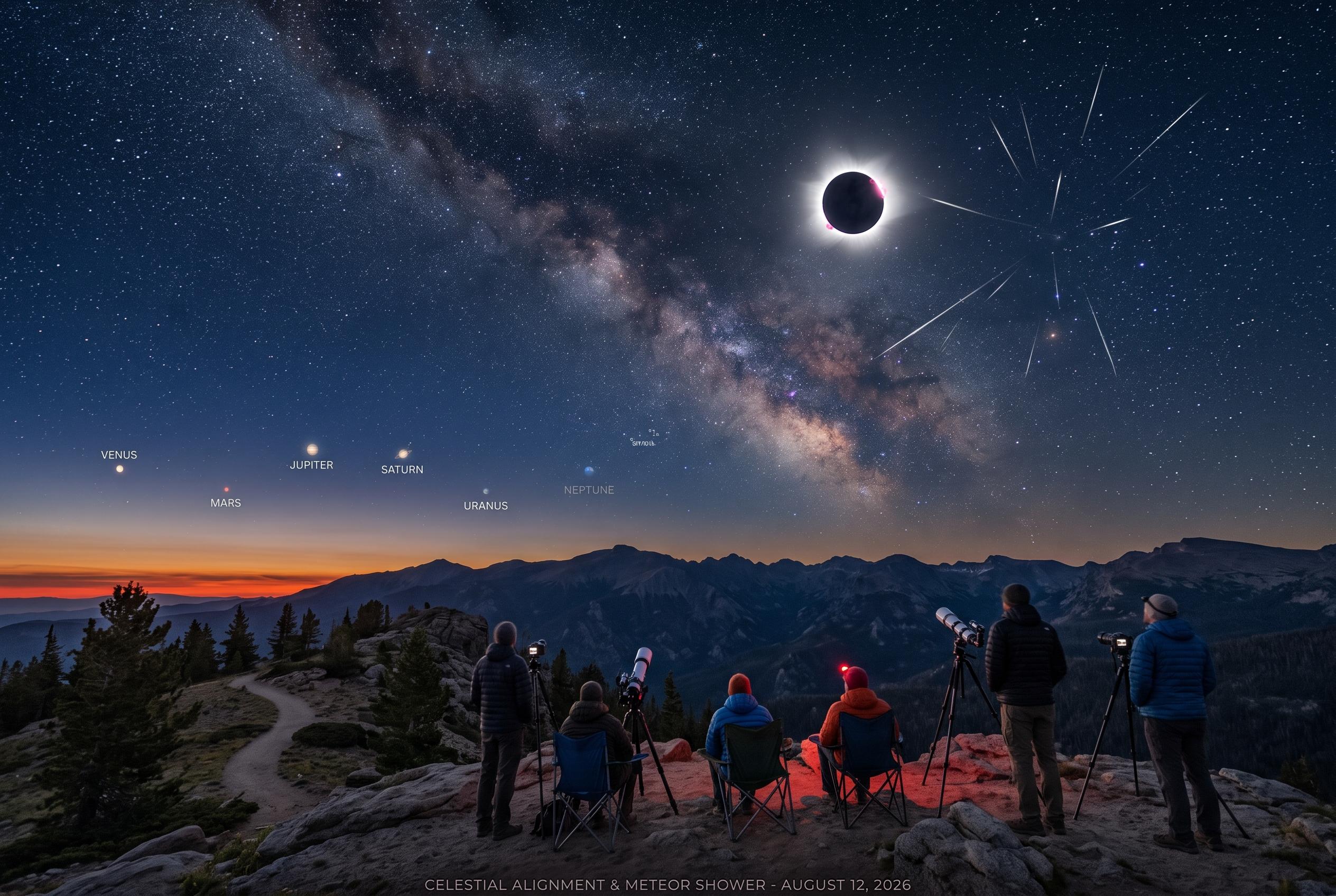
August 12, 2026 is shaping up to be one of those dates that makes skywatchers stop and look up twice. According to the material provided by Times Kuwait and supporting astronomy sources, the day brings a rare trio of attractions: a six-planet pre-dawn display, a total solar eclipse and the peak of the Perseid meteor shower. It is the kind of celestial overlap that gives even casual observers a reason to set an early alarm and stay up late.
Before sunrise, Mercury, Venus, Mars, Jupiter, Saturn and Uranus are expected to be spread across the morning sky, with the outer planets easier to pick out and the inner ones hanging low near the horizon. Space.com says the best chance to spot the full line-up will come just before dawn, when the sky is still dark enough to make the planets stand out. For anyone hoping to identify Uranus or Neptune, binoculars or a telescope may help, depending on local conditions.
Later in the day, a total solar eclipse will cross parts of Greenland, Iceland, northern Spain and Portugal. NASA says observers inside the path of totality will see the Sun completely covered, while those farther away will still get a partial eclipse. That also means safety matters: proper eclipse glasses are essential wherever the Sun remains visible. It is a neat reminder that astronomy is not just about spectacle, but about timing, location and a bit of planning too.
Then, after dark, the Perseids take over. Timeanddate.com and Astronomy magazine both note that the meteor shower’s 2026 peak falls close to a new moon, which should leave skies darker than usual and improve the chances of seeing bright meteors and fireballs. Under clear, rural skies, the shower could produce dozens of meteors an hour. Put simply, August 12 offers a full-day viewing menu, from planets at dawn to shooting stars at night, with an eclipse in between.
Disclaimer: This content is intended for informational purposes only. Readers are advised to exercise their own judgement, conduct due diligence, or consult a qualified expert before acting on any information provided.