

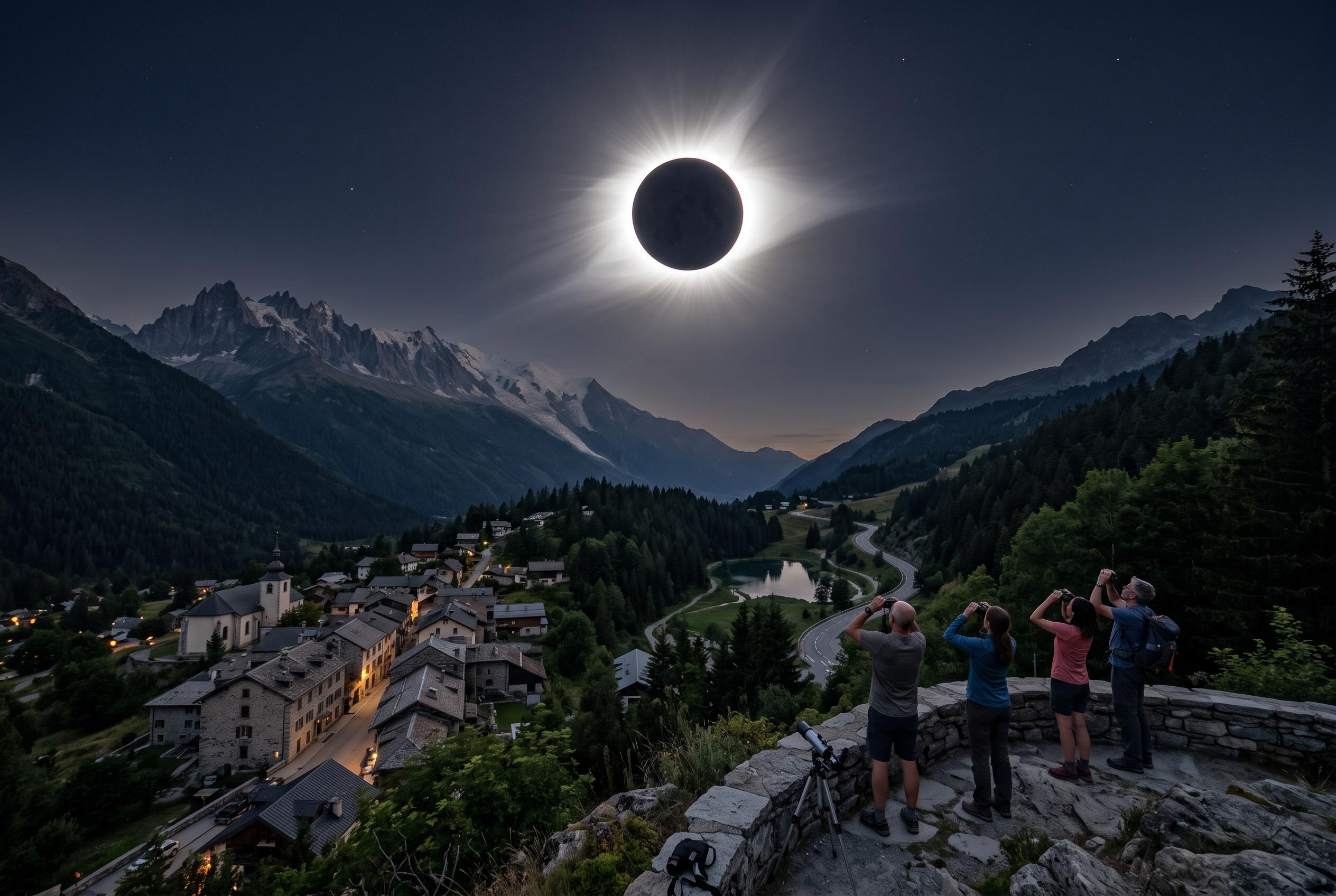

A rare 35-day eclipse season in August offers a total solar eclipse on 12 August and a partial lunar eclipse on 27-28 August, coinciding with the peak of the Perseid meteor shower, providing spectacular skywatching opportunities across Europe and beyond.
August is serving up a rather busy sky show, with a 35-day eclipse season bringing two striking events close together. According to Yahoo News Canada, a total solar eclipse will occur on 12 August, followed by a partial lunar eclipse on the night of 27-28 August, giving skywatchers in Europe and beyond a rare double feature. The timing is not random: astronomers use the term eclipse season for the roughly six-month windows when the Sun, Earth and Moon line up just right for eclipses.
The headline act is the solar eclipse on 12 August, when the Moon will slide in front of the Sun and briefly turn day into twilight for viewers in the narrow path of totality. Space.com says that path will cross Greenland, Iceland and Spain, and that observers in the zone of totality will be able to see the Sun’s corona, the ghostly outer atmosphere that is usually hidden by sunlight. That corona should look different from one eclipse to the next, depending on solar conditions on the day.
The second event, later in the month, will be a partial lunar eclipse visible from Europe, Africa, North America and South America. Yahoo News Canada reports that more than 96 per cent of the Moon will move into Earth’s shadow, creating a deep red “blood moon” effect. For viewers in the UK, it will sit low in the western sky just before sunrise on 28 August, so timing and a clear horizon will matter more than usual.
If that were not enough, 12 August is also the peak of the Perseid meteor shower, one of the year’s most reliable displays. The Associated Press says clear, dark skies could produce 30 to 100 meteors an hour, with the best viewing between midnight and dawn. Looking ahead, Space.com says the next eclipse season begins in early 2027 and will include another total solar eclipse on 2 August 2027, this time over Spain and North Africa.
Disclaimer: This content is intended for informational purposes only. Readers are advised to exercise their own judgement, conduct due diligence, or consult a qualified expert before acting on any information provided.