

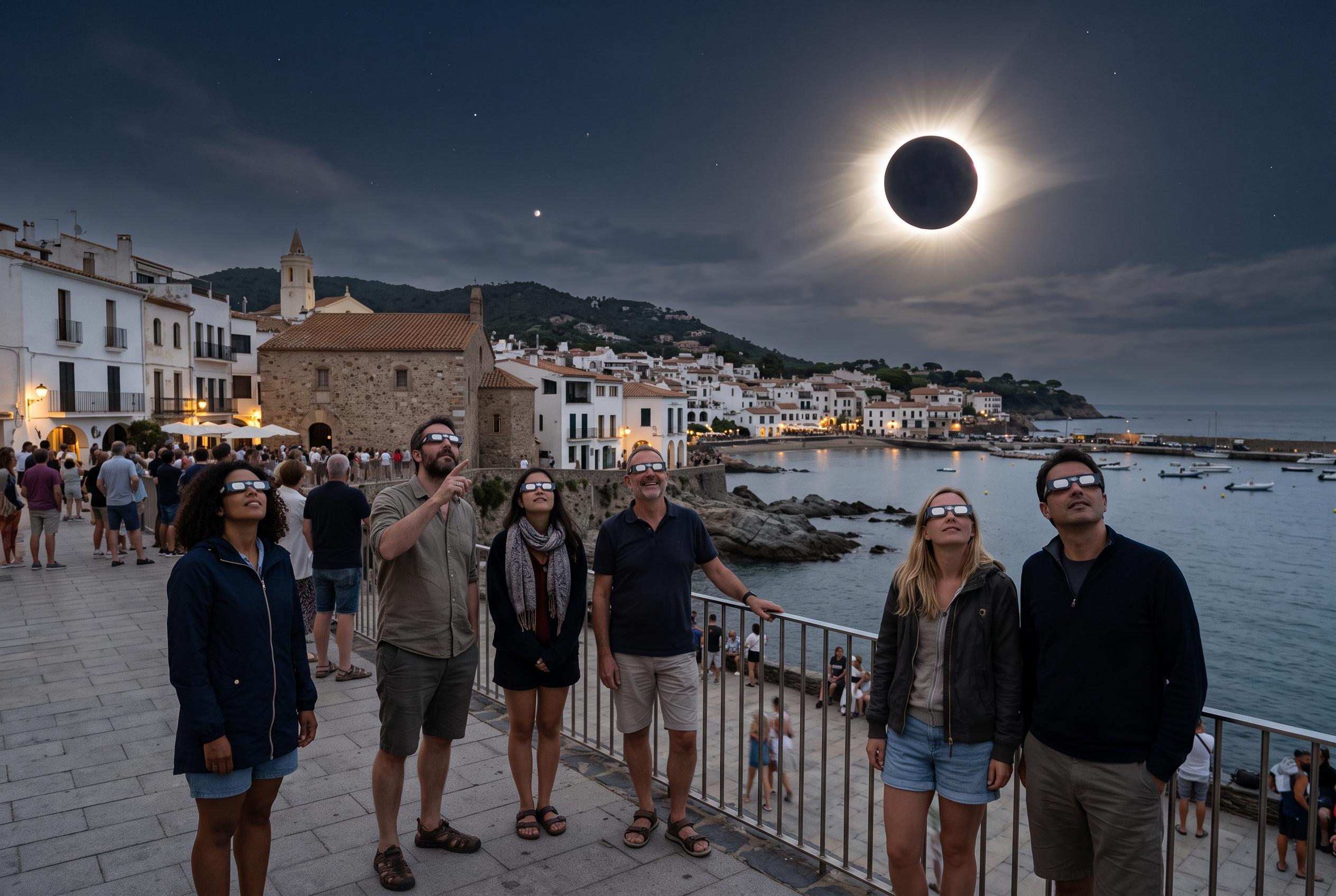

Europe is gearing up for a rare total solar eclipse on 12 August, sparking excitement and safety warnings as viewers in Spain and beyond prepare for a fleeting but spectacular celestial event that offers valuable scientific insights.
Europe is bracing for one of the most eye-catching sky events in years as a total solar eclipse sweeps across the far north of the continent and turns day briefly to dusk in parts of Spain. According to France 24 and the European Space Agency, the eclipse on 12 August will be visible in full only along a narrow track crossing eastern Greenland, western Iceland, northern Spain and a small corner of north-eastern Portugal, while much of Europe, north-western Africa, Canada and parts of the United States will see a partial eclipse instead.
Spain is expected to be the main stage for the spectacle, especially in the north, where the path of totality runs diagonally towards the Mediterranean. NASA says the eclipse will be one of the few chances for viewers in mainland Europe to see the Sun disappear behind the Moon close to sunset, creating what some astronomers call a sunset eclipse. ESA notes that the last total solar eclipse visible from mainland Europe was in 2006, which helps explain why this one has drawn so much attention.
The excitement has also brought a practical headache: safety. France 24 reported a scramble across Europe for certified eclipse glasses, with pharmacies and opticians in Spain struggling to keep them in stock as crowds prepare to travel. Doctors have warned that looking directly at the Sun without proper protection can damage the retina, and observers should only remove filters during the brief period of totality itself.
Beyond the spectacle, scientists see real value in the event. Eclipses offer a rare chance to study the Sun’s corona, the outer atmosphere that becomes visible only when the bright solar disk is covered. Researchers also look at how animals and people react to the sudden shift in light and temperature, making the eclipse both a public show and a useful natural experiment. For many skywatchers, though, the appeal is simpler: a chance to chase one of the decade’s most memorable moments and, if the weather behaves, take home a very dramatic photograph.
Disclaimer: This content is intended for informational purposes only. Readers are advised to exercise their own judgement, conduct due diligence, or consult a qualified expert before acting on any information provided.