

The September full moon, known as the Spring Moon in South Africa, will be visible this weekend closer to the spring equinox, providing stargazers with a vibrant display and a rare alignment with Saturn and Neptune in the evening sky.
South Africa’s skies are set to put on a timely seasonal show this weekend, with the September full moon arriving just after the spring equinox and giving stargazers a neat reminder that the colder months are behind them. The moon reaches fullness on Saturday, 26 September 2026, at 18:48 SAST, and evening observers should have a strong view of it as it climbs above the eastern horizon. In South Africa, the Centre for Astronomical Heritage refers to it as the Spring Moon, rather than the Harvest Moon more familiar in Northern Hemisphere coverage.
That naming difference makes a lot of sense once you look at the calendar. The September equinox falls on 22 September in South African time, marking the astronomical start of spring in the Southern Hemisphere. As timeanddate.com explains, the equinox is the moment when the Sun crosses the celestial equator, and while it is often described as a day of equal light and dark, that is only an approximation rather than a perfect balance. In other words, the moon’s timing is lined up very neatly with the season change.
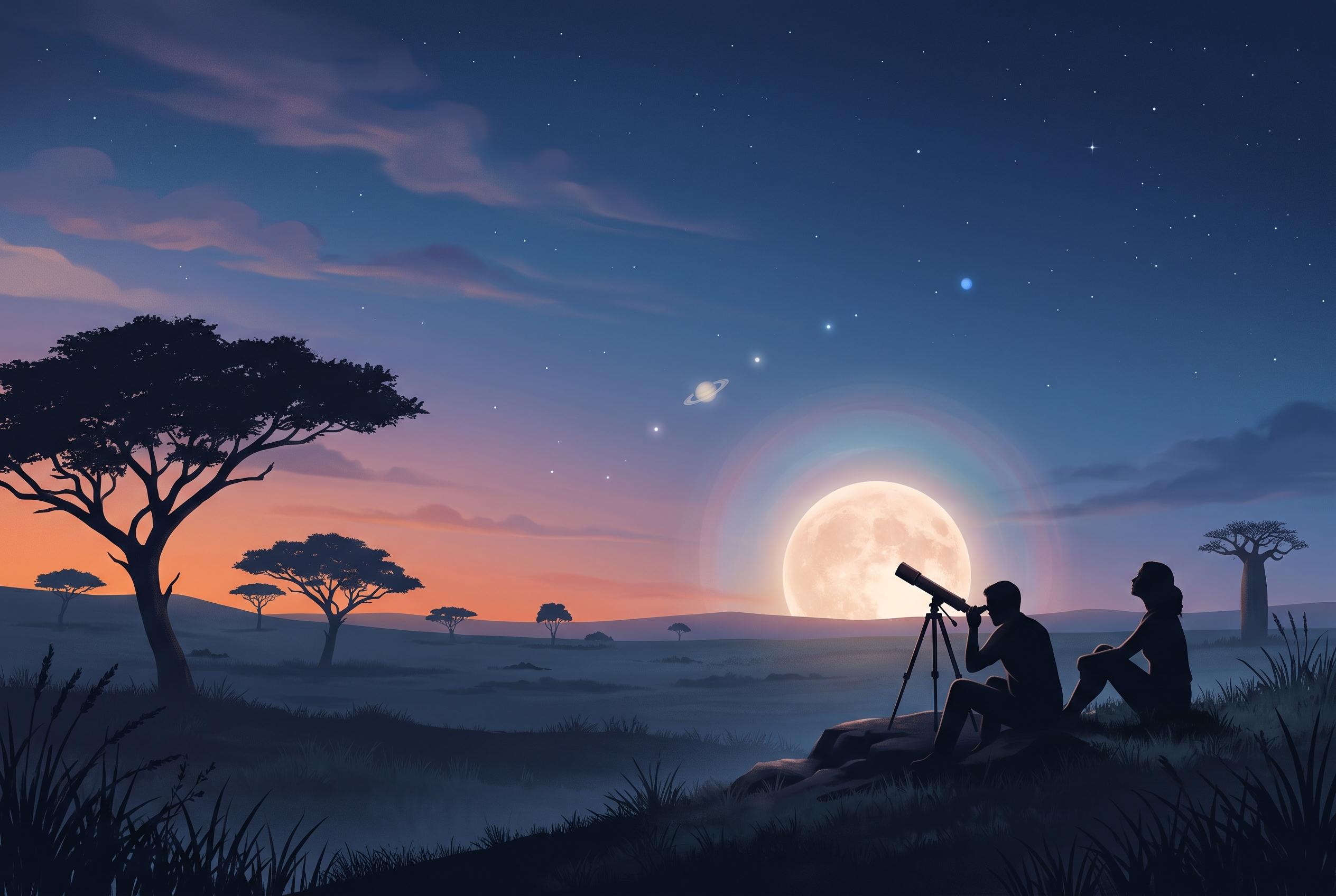
For South Africans hoping to catch the best view, the key is not to wait for the exact minute of peak fullness. The moon should appear effectively full on the evening of 26 September and will look impressive for a day or so on either side. According to the South African report, moonrise is expected at about 17:50 in Durban, around 18:44 in Cape Town and roughly 18:01 in Johannesburg, which means many viewers will be able to watch it rise close to sunset.
There is also a small bonus for anyone who likes a bit of extra celestial company. NASA says the full moon will appear near Saturn, with much fainter Neptune also in the same broad area of sky. Saturn should be visible without optical aid, while Neptune will be much trickier and will need binoculars or a telescope. For the cleanest view, find a spot with an open view to the east and as little light pollution as possible; moonrise often gives the Moon its most dramatic look, especially when it sits low on the horizon.
Disclaimer: This content is intended for informational purposes only. Readers are advised to exercise their own judgement, conduct due diligence, or consult a qualified expert before acting on any information provided.