

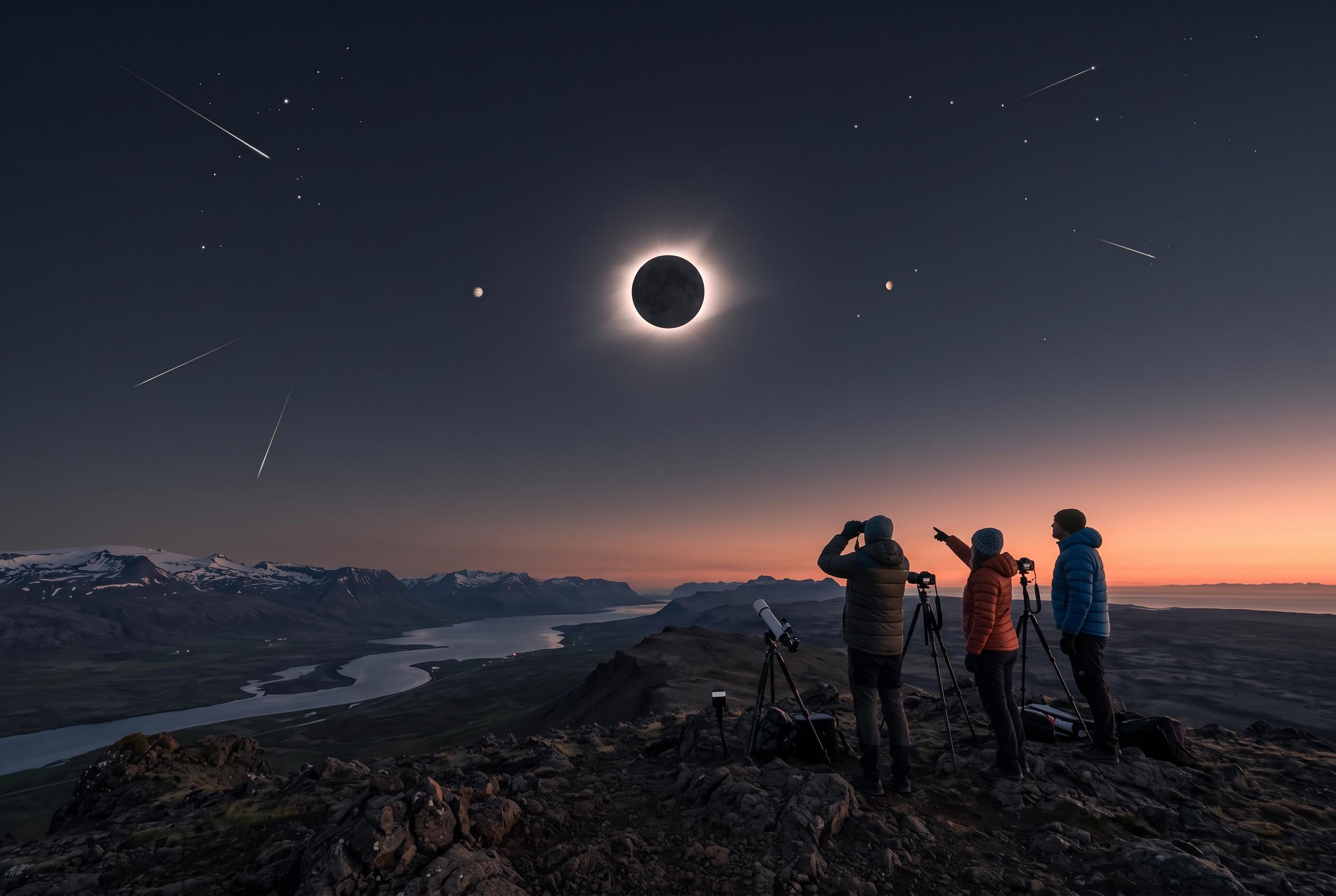

A rare total solar eclipse on August 12, 2026, will be visible across northern regions, coinciding with the peak of the Perseid meteor shower , a celestial event for sky enthusiasts, though India misses out on the eclipse visibility.
The headline event is a total solar eclipse on August 12, 2026, with the darkest part of the shadow tracking across the far north, then Greenland, Iceland and parts of Spain before fading out over the Mediterranean. NASA and Space.com say the eclipse will also be seen partly across a wider stretch of Europe, Africa, North America and the oceans, but not as a total event outside the narrow path.
For people in India, the key point is simple: the eclipse will not be visible there. Timeanddate and Space.com both note that the path misses India entirely, so the event will unfold only in the small number of regions where the Moon fully covers the Sun. That means the much-discussed sutak kaal, the traditional eclipse observance period, is not considered to apply in India for this event because the eclipse cannot be seen from there.
The practical advice, though, is more universal. NASA says anyone who can see even part of the Sun should use certified eclipse glasses or a proper solar viewer, and never look through binoculars, a telescope or a camera without the right solar filter. Regular sunglasses are not enough, which is a useful reminder whenever eclipse day arrives and everyone gets a bit carried away.
There is also a nice bonus for sky-watchers that night: NASA says the Perseid meteor shower is set to peak on the evening of August 12 into the early hours of August 13, helped by a new moon and darker skies. The best viewing tip is refreshingly low-tech: go somewhere dark, face north-east after nightfall and give your eyes about 30 minutes to adjust before scanning the sky.
Disclaimer: This content is intended for informational purposes only. Readers are advised to exercise their own judgement, conduct due diligence, or consult a qualified expert before acting on any information provided.