

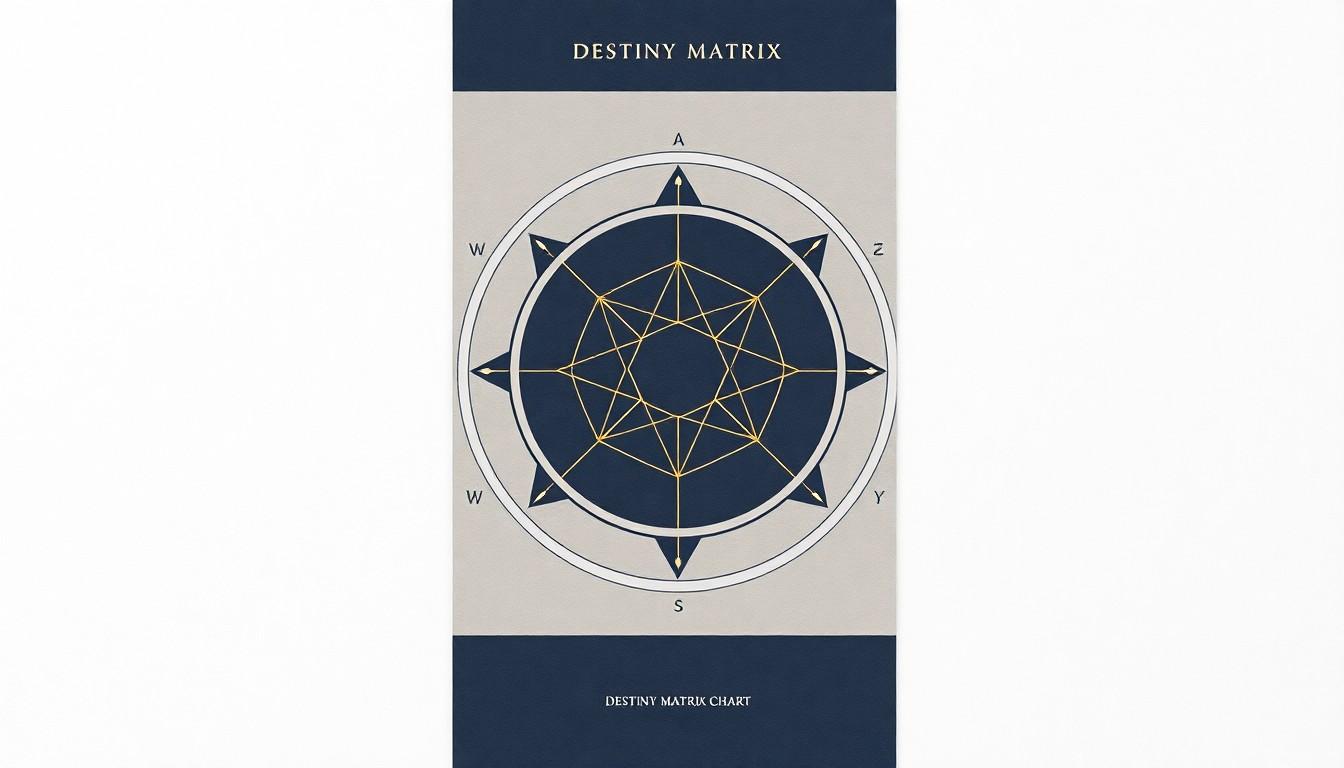

The Destiny Matrix Chart presents a visual, structured approach to understanding the self through a geometric map based on Tarot’s Major Arcana, claiming to reveal strengths, patterns, and life lessons beyond traditional personality tools.
The Destiny Matrix Chart is presented as a visual way of understanding the self, but its appeal lies less in novelty than in structure. Where many personality systems reduce people to labels, this one arranges birth data into a geometric map that claims to show strengths, pressures, and long-running patterns in one glance. According to the Matrix of Destiny site, the chart is intended as a practical guide to character and purpose, rather than a one-off reading to be skimmed and forgotten.
Its framework is built on the 22 Major Arcana of the Tarot, with each calculation reduced through a base-22 system. That means numbers are not taken down to a single digit in the usual numerology fashion, but are instead held within a range tied to the Tarot’s archetypes. The system’s creators say this creates a consistent method for translating a birth date into a wider energetic profile, one that is meant to feel more precise than a standard horoscope or name-based numerology.
At the centre of the chart sits what is often described as the inner self, or core energy. In the system’s own language, this represents a person at rest: the self that emerges when they are not trying to perform for other people. The outer self, by contrast, is linked to the day of birth and is said to reflect how others initially perceive someone. The month and year add other layers, associated with intuition, material resources and the broader structure of a person’s life. Together, these points form the chart’s main cross, which acts as the foundation for the rest of the reading.
The most distinctive feature is the karmic tail, a three-number sequence placed at the base of the chart. Supporters of the method say it reveals repeated lessons, unresolved patterns and behaviours that continue until they are consciously addressed. The system identifies 26 recognised karmic tail combinations, each with its own interpretation. That gives the chart a more specific vocabulary than many other self-discovery tools, especially for people who already notice recurring cycles in relationships, work or money.
Several websites built around the system also promote calculators that generate the chart automatically from a date of birth. That matters because the manual version involves multiple reductions and cross-checks, which increases the chance of error. The automated versions are framed as a way to make the process faster and to show related areas such as relationship lines, money channels and life-purpose calculations without requiring the user to do the arithmetic themselves.
The chart is also marketed as broader than a simple personality test. Some versions include compatibility readings, life-cycle interpretations and chakra analysis, all tied back to the same base-22 logic. Proponents say this makes the system feel more layered than traditional numerology, and easier to read than an astrological wheel. The visual format is part of the appeal: for some users, seeing the numbers laid out as a pattern makes the ideas feel less abstract and more personal.
Still, the chart’s limits are clear. Its claims about past lives, karmic debts and energetic influence belong to esoteric tradition, not scientific validation. Its value depends heavily on whether a user finds symbolic systems meaningful in the first place. For sceptics, it will remain an elaborate interpretive exercise. For others, it may work as a reflective framework, offering language for habits and tensions they already sense in their own lives.
Disclaimer: This content is intended for informational purposes only. Readers are advised to exercise their own judgement, conduct due diligence, or consult a qualified expert before acting on any information provided.