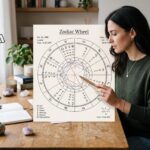



A tarot spread designed for big decisions shifts focus from seeking definitive answers to illuminating overlooked truths and encouraging personal responsibility, offering a more grounded approach to choice.
A tarot spread before a big decision is less about asking the cards for a verdict and more about slowing your brain down long enough to notice what you have been avoiding. The five-card layout in Ask Astrology’s guide is built for exactly that moment: when you are caught between options, your thoughts are getting loud, and you could do with a calmer way to see the shape of the choice.
The spread works by separating the obvious question from the real one. Instead of stopping at “Should I do this?”, it asks what you are actually deciding, what you already know but keep brushing aside, what yes would truly cost, what no would truly cost, and what you will kick yourself for ignoring. That makes it more useful than a simple one-card pull, which can feel decisive without really showing the trade-offs.
Other tarot sites take a similar approach. Fliptarot’s Wirth Cross spread, for example, frames major choices through supporting and opposing factors, advice, outcome and central synthesis, while other decision spreads compare two paths side by side so you can see what each option opens up, demands and sets in motion. The common thread is simple: helpful tarot for decision-making tends to clarify the situation rather than hand you a neat little answer.
The biggest mistake, according to Ask Astrology’s guidance, is treating the deck like a shortcut to outsource responsibility. Pulling the same question over and over, or reshuffling until you get a nicer-looking response, usually turns the reading into wishful thinking with prettier props. The better move is to write the question down first, draw once, and take the result seriously enough to sit with it.
That is also why the spread can feel surprisingly grounding. It does not pretend to make the choice for you, and it does not claim certainty. Instead, it gives your intuition a bit more room to speak, which is often the point when the stakes are high. In that sense, the real value is not prediction but perspective: enough clarity to help you choose with your eyes open.
Disclaimer: This content is intended for informational purposes only. Readers are advised to exercise their own judgement, conduct due diligence, or consult a qualified expert before acting on any information provided.