

A simple three-card practice reframes Tarot as a prompt for prayer, honest self-examination and discerning an action for the day ahead.
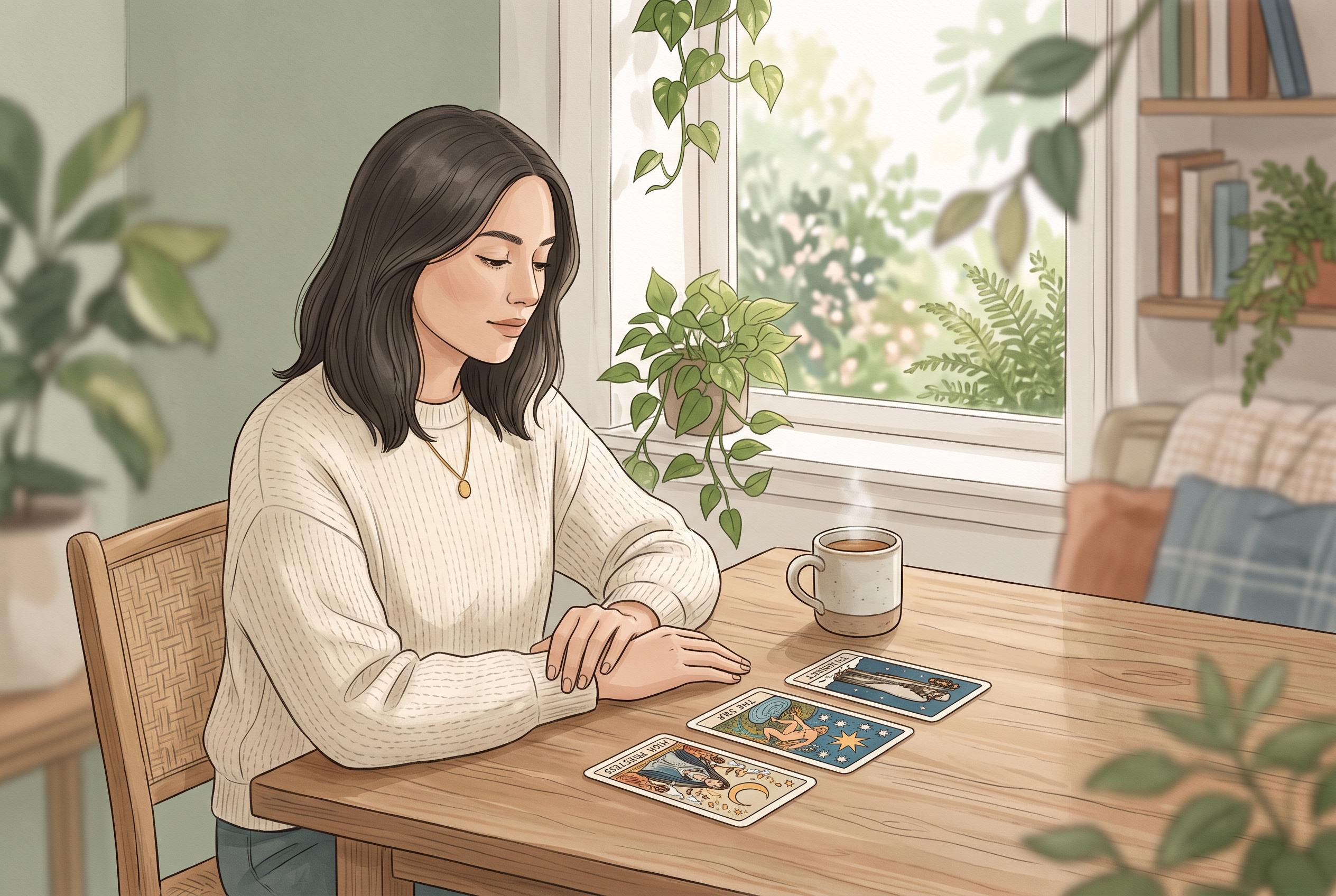
A simple daily Tarot practice can become less about prediction and more about paying attention. In a Christian contemplative frame, the cards are not treated as a fortune-telling device but as a prompt for prayer, reflection and honest self-examination. The method described here keeps things intentionally small: three cards, drawn to highlight what needs attention, what might be hidden from view and what a faithful response could look like next.
That stripped-back format is part of the appeal. The practice does not require a specially labelled Christian deck, only imagery that speaks clearly enough to invite reflection. Related guidance on devotional Tarot practice and daily reading routines makes a similar case: a sustainable ritual works best when it is simple, repeatable and easy to return to day after day. Even a few minutes in the morning, or after Scripture reading, can create a useful pause before the day gathers speed.
The first card acts as a kind of spotlight. Instead of reaching immediately for a memorised meaning, the reader is encouraged to study the image and ask what in life is asking for attention right now. That might be a relationship, a responsibility, a habit, or even a virtue that needs strengthening. The second card adds a useful check on assumptions. It points to a blind spot, a pattern the reader may be missing, or a response shaped by old fears rather than present reality. The point is not self-criticism for its own sake, but compassionate honesty.
The third card shifts the reading from insight to action. It asks what a faithful step could look like in ordinary life, whether that means speaking up, waiting, praying, setting a boundary or simply noticing more carefully. That emphasis on response fits neatly with devotional Christian Tarot approaches that use the cards to support discernment rather than certainty. It also echoes the broader daily-reading advice found in other Tarot guides: observe the card, journal briefly, and let the image sharpen intention for the day ahead.
For readers who enjoy a little extra structure, the practice can be extended with a quintessence calculation, though that is entirely optional. In the example reading described in the source article, the extra layer pointed towards The Moon, which added a timely note about uncertainty, perception and the need to keep trusting even when the path is not fully visible. That is where the practice becomes especially interesting: it leaves room for complexity without demanding an instant, closed conclusion.
What makes this approach feel so workable is its gentle balance. It creates enough structure to prevent the exercise from drifting, but not so much that it becomes rigid or overcomplicated. Used prayerfully, the three-card spread can become a small daily habit of symbolic listening, helping the reader notice what matters, question what may be distorted and respond with a little more wisdom, patience and love.
Disclaimer: This content is intended for informational purposes only. Readers are advised to exercise their own judgement, conduct due diligence, or consult a qualified expert before acting on any information provided.