

Starting with simple spreads and focused questions, beginners can build confidence in tarot, emphasising restraint and personalised approaches to deepen insight without overcomplication.
Trying tarot for the first time can feel a bit like opening a door to a room full of symbols and hoping the lights switch on quickly. The trick, as several beginner guides note, is not to reach for the most elaborate layout straight away. A spread simply gives each card a job, which makes the reading easier to follow and far less likely to spiral into guesswork.
Start with a question that has shape
The best beginner readings usually begin with a question that is clear enough to steer the cards but open enough to leave room for insight. Rather than asking for a yes or no verdict on a relationship or career move, it often works better to ask what you need to understand, notice or work with right now. That keeps the reading grounded in the present and helps protect you from treating tarot like a crystal ball. If the question feels emotionally loaded, writing it down first can help you stay focused.
One card can be more than enough
A one-card draw is often the easiest place to begin, and it is not a watered-down version of tarot. It is a tidy, practical way to practise seeing symbols, noticing your first reaction and linking that to the day ahead. Some readers use it for morning guidance, while others prefer an evening reflection on what the day was trying to teach them. Guides from several tarot sites agree that this simple layout is one of the best ways to build confidence without getting swamped.
The three-card spread does a lot of heavy lifting
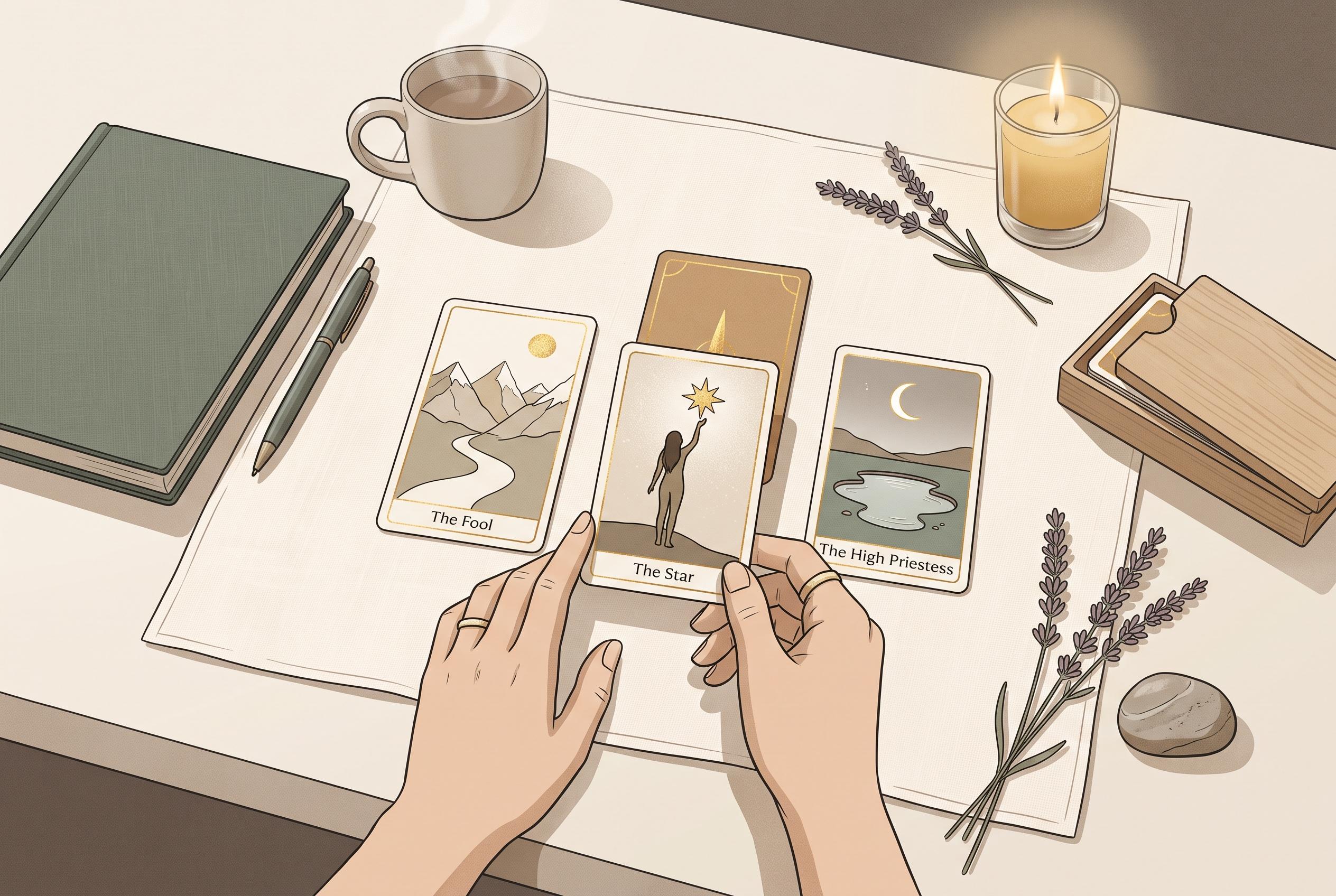
If you want a little more context, the three-card spread is the classic next step. Many beginner resources recommend it because it can be adapted to questions about past, present and likely direction, or to a situation, challenge and guidance format. The point is not to force a dramatic storyline onto the cards, but to let them show how a situation is moving. In that sense, the third card is better understood as a possibility than a promise.
Pick the spread that matches the question
That idea matters more than it might first appear. A broad life question usually needs more structure than a quick daily check-in, while a relationship or work question may benefit from a layout designed for that specific area. Beginner guides from tarot educators repeatedly stress that the shape of the spread should match the shape of the question. That is what keeps a reading useful rather than muddled.
Situational spreads can make things feel less vague
Once you are comfortable with the basics, situational spreads can be especially helpful. A relationship check-in, for example, can focus on your energy, the dynamic itself and what supports a healthier path forward, rather than trying to read someone else’s private thoughts. Likewise, a decision spread can compare two options side by side without pretending the deck should make the choice for you. The cards can highlight pressure, timing, resistance or ease, but the real-world decision still belongs to you.
Keep it simple when life feels busy
A week-ahead spread can be a good middle ground when one card feels too brief and a larger layout feels like too much. It can offer a broad sense of the week’s tone, what to welcome, what to watch and what might help you stay steady. Some readers also like self-compassion spreads, especially after disappointment or burnout, because they shift the focus from prediction to care. That can make tarot feel less like a performance and more like a quiet check-in.
The real beginner skill is restraint
If there is one thing most of these guides have in common, it is the reminder not to overcomplicate the process. There is no need to keep pulling extra cards until the answer feels comfortable. A cleaner reading often comes from sitting with the first layout, writing down what you see and letting it settle. And if a reading touches on health, legal, financial or safety concerns, practical professional advice should sit alongside any spiritual reflection. Tarot can be thoughtful and revealing, but it works best as a guide for reflection rather than a substitute for real-world support.
Disclaimer: This content is intended for informational purposes only. Readers are advised to exercise their own judgement, conduct due diligence, or consult a qualified expert before acting on any information provided.